



Trip overview
The Nyin Valley lies in the northwestern corner of Nepal, close to the Tibetan border. It is one of the least-visited trekking areas in Humla. Unlike commercial trekking routes, this valley remains quiet and culturally intact.
The journey is less about high passes and more about people. The Nyinba community, originally of Tibetan origin, continues to follow traditions shaped by geography, isolation, and seasonal living. In some villages, the traditional polyandry system still exists. It developed as a way to manage farmland and family property in a harsh mountain environment.
This trek offers cultural understanding rather than spectacle.
Village Life and Local Traditions
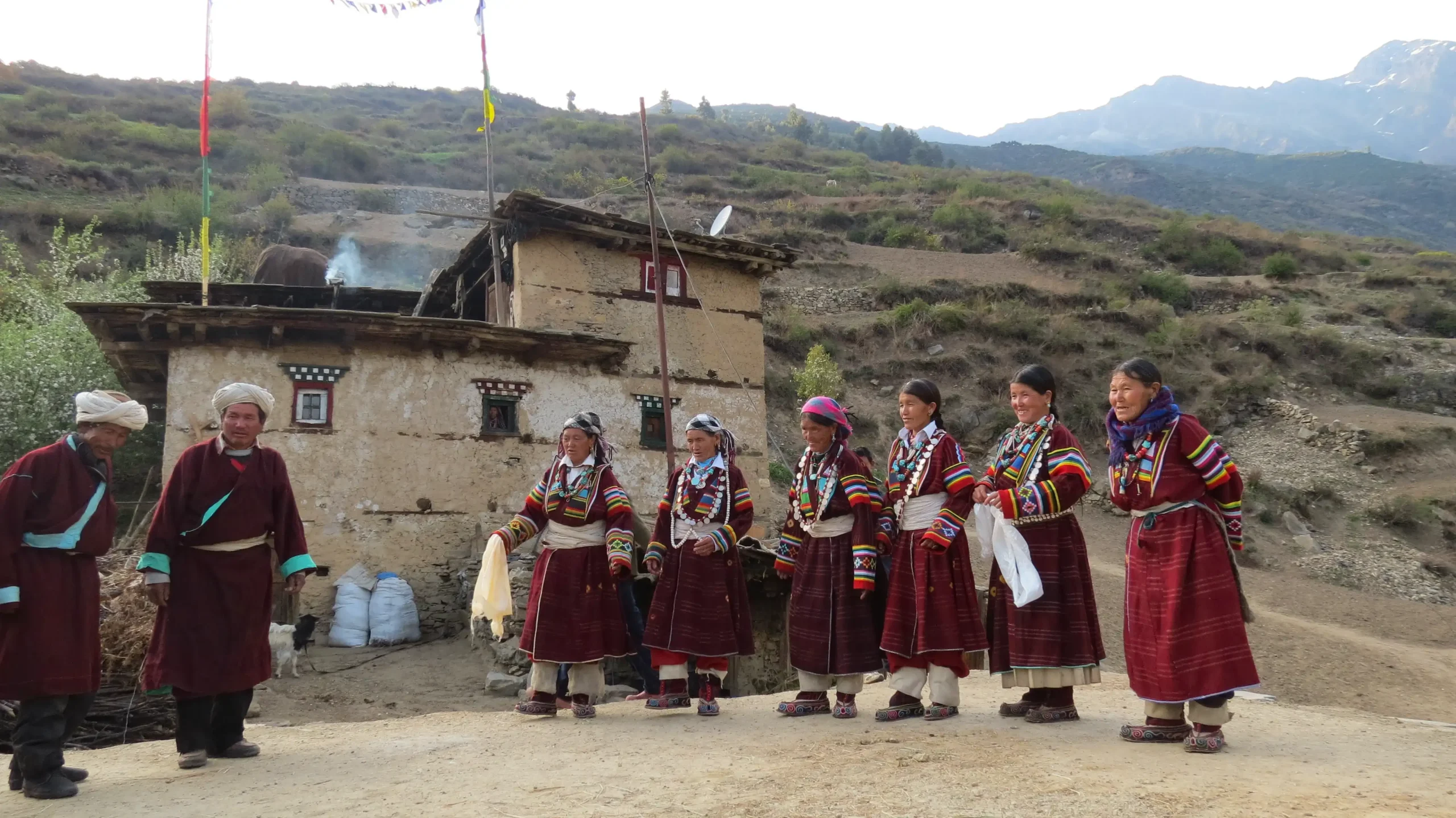
The trail passes through villages such as Buraunse, Baragaun, Torpa, and Nimatang. Stone houses are built close together to protect from winter winds. Barley and buckwheat fields line the hillsides during the growing season.
Older residents still speak about the salt trade routes that once connected Tibet and Nepal. Families worked as traders, farmers, and herders. Life moved with the seasons, and in many ways, it still does.
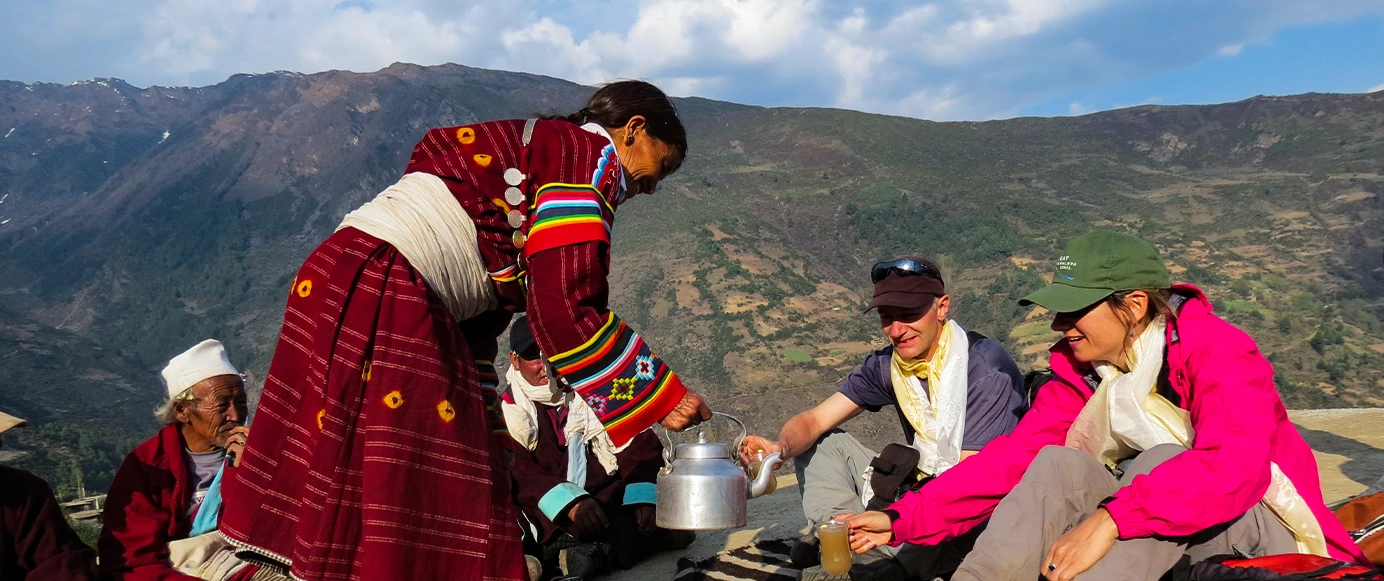
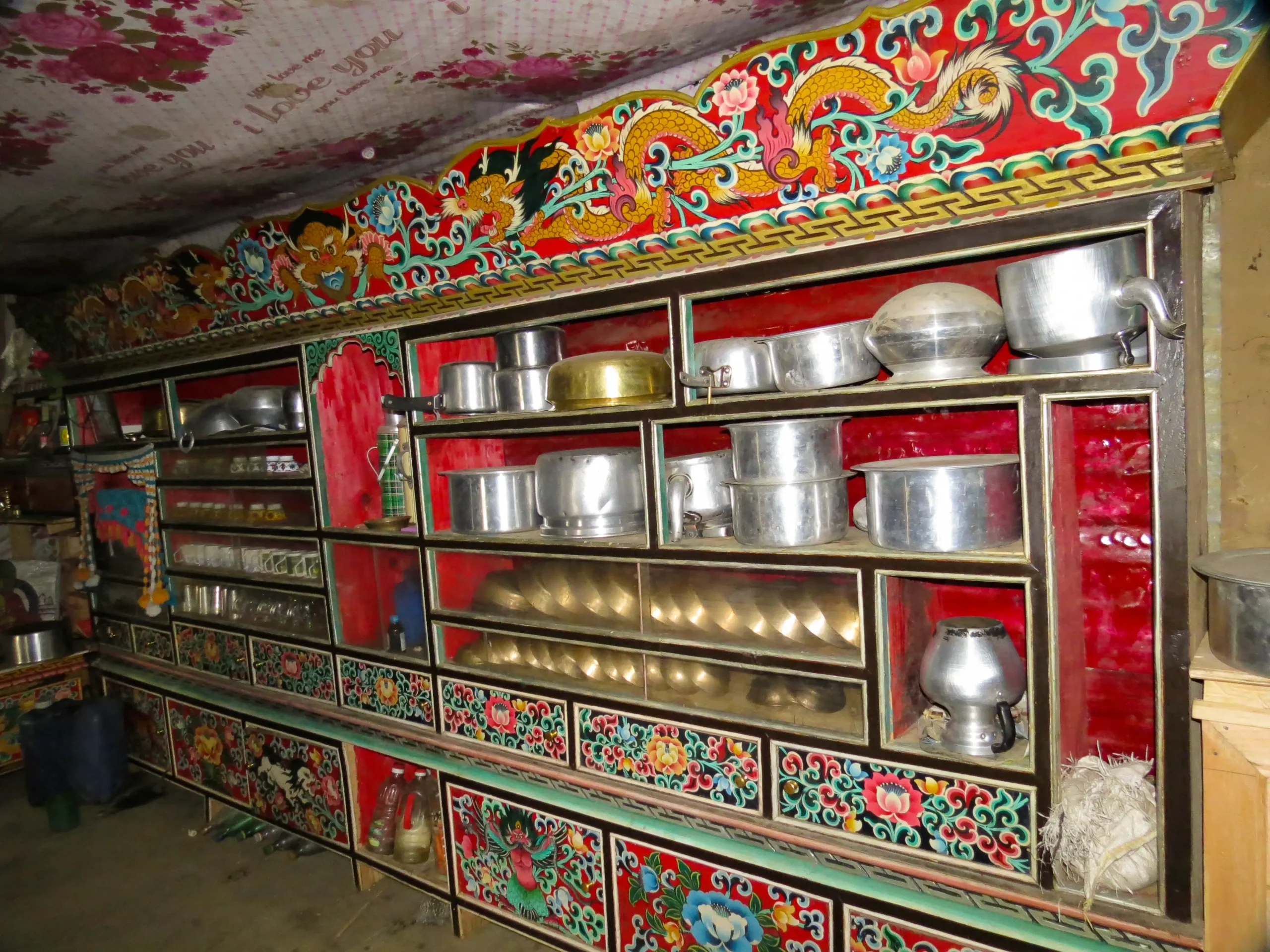
Stories are shared in kitchens over butter tea. They are not preserved in museums.
“In winter, cooperation is everything,” says Tenzin, a local Nyinba guide from Burause. “Visitors who walk slowly and listen understand our valley better.”
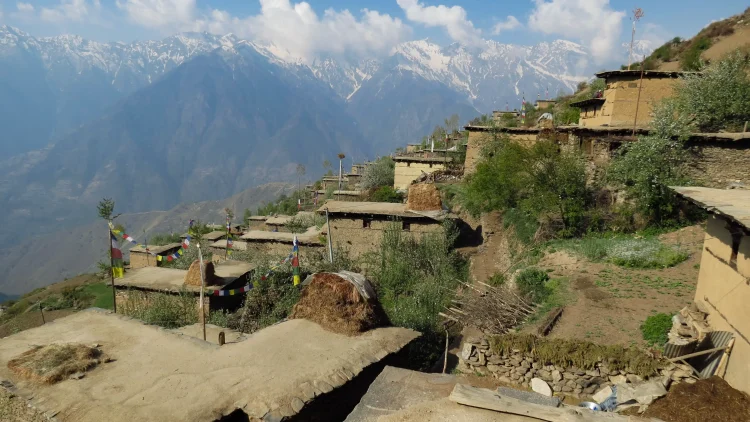
Raling Gumba and Sacred Sites
Raling Gumba, located at around 4,100 meters, is one of the most important monasteries in this part of Humla. It belongs to the Nyingma school of Tibetan Buddhism and remains spiritually active.
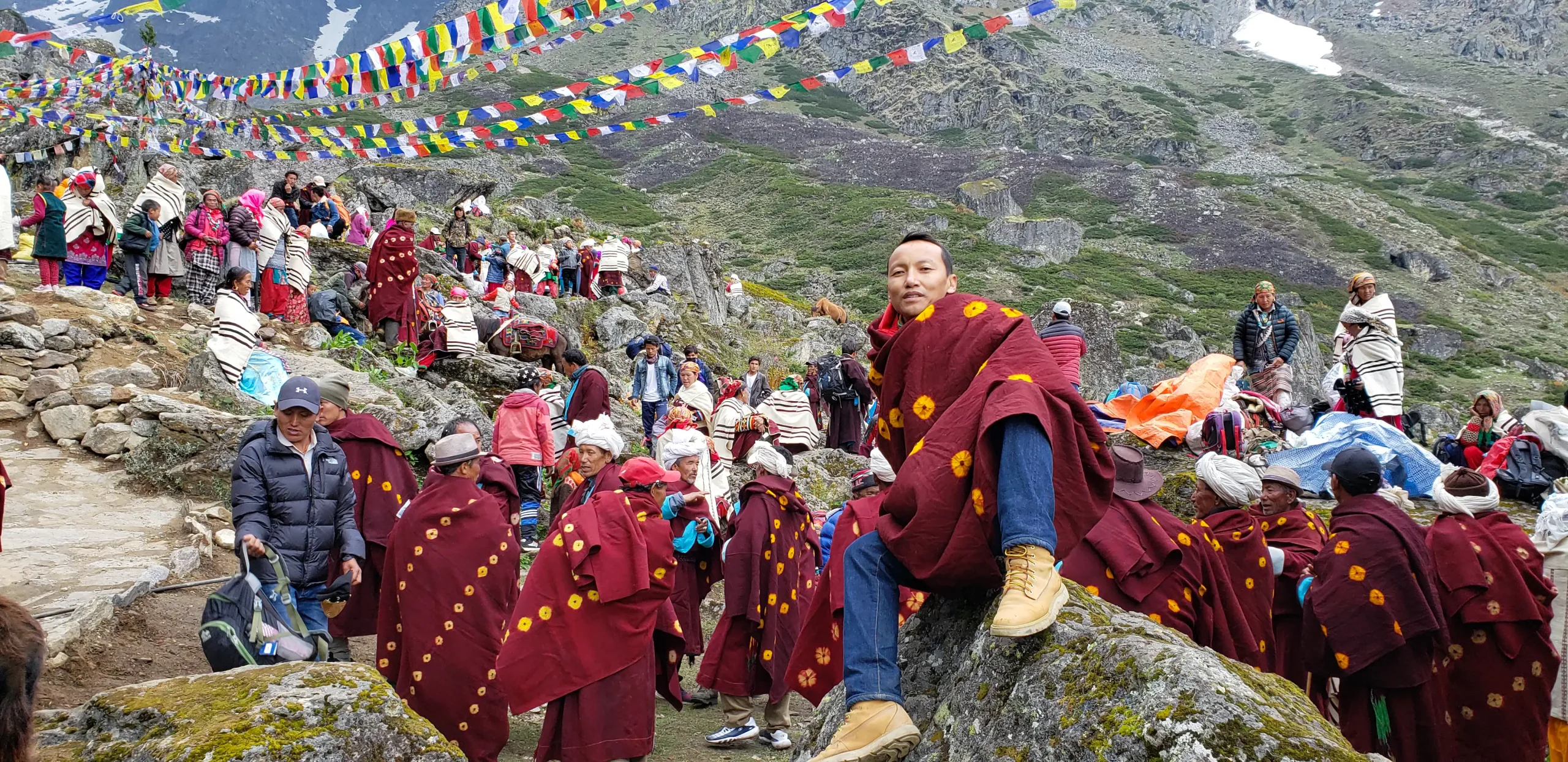
During Saga Dawa, villagers gather for prayers, rituals, and the raising of prayer flags. Long horns echo across the valley. Families travel from surrounding settlements to participate.
Near the trekking route lies Kharpunath, a sacred Hindu pilgrimage site dedicated to Lord Shiva. Pilgrims visit during Janai Purnima. Nearby natural hot springs provide rest after long walking days.
In Humla, Buddhism and Hinduism exist side by side. The boundaries are not strict.
“Saga Dawa is a community event first,” explains Dorje, one of our senior guides. “Guests are welcome, but respect is important.”
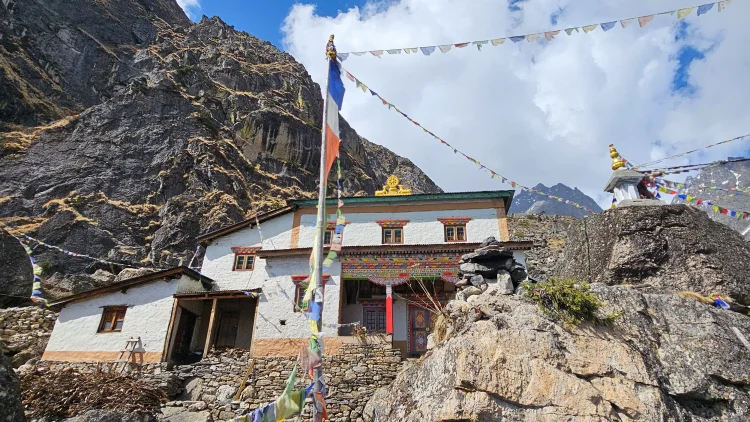
Thehe Village and Shamanic Practice
Thehe is one of the larger villages in this region, with nearly 800 traditional stone houses. Alongside Hindu rituals, ancient shamanic practices are still respected.
Local healers conduct ceremonies when requested by villagers. These traditions are part of everyday life rather than cultural performances.
The coexistence of belief systems makes this region culturally distinct even within western Nepal.
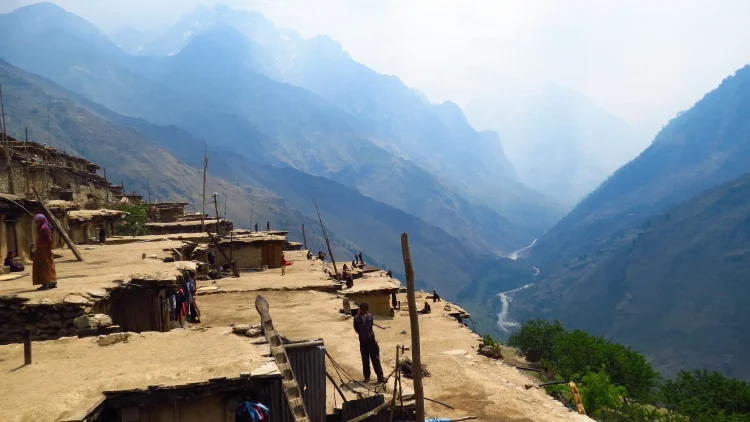
Landscape and Walking Experience
Although this is a cultural trek, the natural scenery is impressive. Views of the Changla Himal range accompany much of the route. Trails pass through river valleys, terraced slopes, juniper forests, and suspension bridges.
Daily walking hours range between 5 to 7 hours depending on the section. The highest point of the trek reaches approximately 3,930 meters, making it suitable for trekkers with reasonable fitness and gradual acclimatization.
Electricity is limited in some villages. Internet access is unreliable. Conditions are basic but welcoming.
Access and Logistics
Reaching Nyin Valley requires flights from Kathmandu to Nepalgunj and onward to Simikot. Weather conditions may affect flight schedules, especially during the monsoon and winter.
Permits are required for Humla region trekking. Local coordination is essential due to limited infrastructure.
Why Trek the Nyin Valley with Firante Treks & Expeditions
Humla requires careful planning. Flight timing, permits, local communication, and accommodation arrangements must be organized in advance.
Firante Treks works closely with Nyinba families and local guides from the region. This ensures responsible tourism practices and direct local benefit.
Our team focuses on:
- Experienced regional guides
- Small group management
- Cultural sensitivity
- Flexible scheduling for weather conditions
Nyin Valley Cultural Trek, Remote Cultural Journey in Humla, Nepal Highlights
Cultural & Spiritual Experiences
- Experience the rare polyandry tradition among Nyinba communities in remote Humla
- Visit Raling Gumba, one of the holiest Nyingmapa Buddhist monasteries in Nepal
- Witness the vibrant Saga Dawa Festival with traditional Buddhist ceremonies and rituals
- Explore Kharpunath Temple, a sacred Hindu pilgrimage site dedicated to Lord Shiva
- Discover the unique blend of Hinduism and Shamanism in Thehe village (800+ stone houses)
- Enjoy authentic homestay experiences with Tibetan-origin Nyinba families
Villages & Communities
- Trek through traditional Nyinba villages: Buraunse, Baragaun, Torpa, and Nimatang
- Experience genuine Himalayan hospitality in centuries-old stone houses
- Learn about ancient Tibet-Nepal caravan trade routes and salt trading heritage
- Support sustainable community tourism in one of Nepal’s least-visited regions
Natural & Adventure
- Explore off-the-beaten-path wilderness in western Nepal’s remote Humla district
- Enjoy panoramic views of Crystal Peak and Changla Himal range
- Relax in therapeutic natural hot springs beside Kharpunath temple
- Trek through pristine landscapes untouched by mass tourism
Trek Features
- Moderate difficulty trek reaching maximum altitude of 3,930m
- All-year-round trekking suitable for flexible travel planning
- Small group sizes (minimum 2 pax) for personalized cultural immersion
- 11-day comprehensive itinerary from Kathmandu to Kathmandu
- All-inclusive package: accommodation, meals, and permits included
- Expert local guides with deep knowledge of Nyinba culture and language
Nyin Valley Cultural Trek, Remote Cultural Journey in Humla, Nepal Itinerary
Expand AllArriving in Kathmandu (1,350 m)
Welcome to Nepal! After landing at Tribhuvan International Airport in Kathmandu, you will be received by our Firante Treks & Expeditions team and transferred to your hotel. The capital is a dynamic city where ancient temples, busy markets and colorful prayer flags erects the backdrop of your Himalayan adventure.
The day is mainly for you to rest from your flight. You are free to relax at your hotel or maybe take a peaceful stroll this evening around Local market, eat in a local restaurant, and get a feel for Nepal’s multi-faceted culture.
Kathmandu Valley Sightseeing and Trek Permit Process
Today, we will arrange your trek permits so you can concentrate on getting ready for your Nyin Valley Trek. After permits are obtain we will take a private vehicle, to visit some of Kathmandu Valley’s famous world heritage UNESCO sights.
You will start at Swayambhunath (Monkey Temple) which sits on a hill and provides magnificent views of the city. Next you will visit Pashupatinath Temple, a famous (Hindu) temple sacred to Lord Shiva, located on the banks of the holy Bagmati river. This is a great place to observe people performing rituals. Lastly you will visit Boudhanath Stupa, Nepal’s largest stupa with an impressive white dome surrounded by colorful prayer flags.
This day supports an instructive introduction to Nepal’s culture, religion, and local life to give you a feel for the trek ahead.
Flight from Kathmandu to Nepalgunj (150 m)
Today you will fly from Kathmandu to Nepalgunj via domestic airline. If it is a clear day, you will be able to see the Annapurna range and Dhaulagiri Himal as you fly. To get the best seat, sit on the right-hand side of the plane window.
The flight is about 1 hour and takes you from the hills of Kathmandu down to the lowlands of western Nepal. After arriving in Nepalgunj you will be escorted to your hotel for you to rest and prepare for the next day to Simikot, the gateway to Humla.
Flight to Simikot (2,910 m) and Trek to Buraunse via Buraunse Gompa
Today you will fly to Simikot, the headquarters of Humla.The flight from Nepalgunj takes around 45 minutes and is incredibly beautiful, taking you over ridges, deep gorges, and the stunning peaks of the Himalaya. Arriving at Simikot Airport is an adventure in itself.
Once in Simikot, you will start your trek towards Buraunse, steadily uphill in and around this vibrant little town and across some farmland and terraced fields until you arrive at Buraunse Gompa (3,430m), a small Tibetan Buddhist monastery that is sacred to Tibetan Buddhists. After a visit to the Gompa, you’ll head carefully downhill along a narrow and steep path until you arrive at Buraunse village (3,100m), the regional home to the Nyinba.
You will be staying overnight in a local homestay. You can expect a warm welcome and a taste of an authentic lifestyle of a traditional Tibetan-style house.
Trek from Buraunse (3,100 m) to Nimatang (3,325 m)
Leaving Buraunse, you will descend gently toward the Ghatte Khola stream and cross a wooden bridge over the fast-flowing water. From there, the path climbs gradually through terraced hillsides with small stupas and mani walls along the route, emphasizing the Buddhist faith that so many people cherish in this valley.
After approximately two and a half hours, you will arrive at the Kangni (gate stupa), marking the entrance to the village
of Torpa. The village is calm and composed with stone-built houses and prayer flags drooping and dancing in the wind. Beyond the village of Torpa lies the Bhibuck Cave, a simple meditation cave that has been used for generations.
Continuing onwards from Torpa and passing the small settlement of Hutick Village, our last one and a half hours walking brings us to Nimatang (3,325 m). This quiet Nyinba village is a final stop before the sacred Raling Gumba.
You will spend the night at a local homestay, which gives you a genuine flavor of life in the Nyin Valley with welcoming family dynamics and hospitality.
Trek from Nimatang (3,325 m) to Raling Gompa (4,000 m)
The path leaves Nimatang gently, trailing off into a forest that smells of pine and juniper. After about a half hour, the path drops to Ghatte Khola, where you will cross the river on an old iron bridge, shaking a little beneath us. On the far side of the river, you will begin climbing; a steady, unfaltering pull that lifts us higher through silent trees.
After about an hour and a half, the trees give way, and the land opens out to wide views of the Nyin Valley, with the Changla Himal Range glimmering white against the sky. The path carries us onwards to Tokra, reached in another thirty minutes. This is not just a meadow, but a gathering ground: the Nyinba pitch their tents here every year to celebrate the Saga Dawa Festival. Even when desolate, it has the sensation of being enlivened with memory.
From Tokra, the climb will become longer and more deliberate. For the next two hours you will incline, towards Raling Gompa (4,000 m), one of the holiest pilgrim sites in Humla. Finally, Raling appears, set into a sheer cliff face, with Crystal Mountain beyond, silently keeping watch.
Our team will set up camp close to the Gompa, and follow the local tradition of circling the monastery clockwise before stepping inside. The chants and flicker of butter lamps fill the air with an ancient calm. Before returning to camp, you will also visit the Milarepa Cave, where the great Tibetan saint is said to have meditated.
Trek from Raling Gompa (4,000 m) to Bargaun (2,940 m)
Leaving Raling Gompa, you will descend a gentle slope, backtracking on our outward route to the iron bridge across the Ghatte Khola, you will reach a junction shortly after you cross the bridge and will go left to continue toward Talki village (just below Nimatang).
The route from Talki gets quite straight and easy-going as you head for Bargaun. On this route, you will pass one or two stone houses occupied by Thehe villagers, cross a tributary stream, and possibly spot several birds flitting about in the trees. The walk time from Talki to Bargaun takes only 1 and half hours so this section is a quiet and unhurried walk along the Nyin Valley trek path.
By early afternoon you will arrive at Bargaun (2,940 m), a typical Nyinba village with many fields and prayer flags.
Trek from Bargaun (2,940 m) to Karpunath (2,106 m)
Today you will descend from Bargaun, walk down through terraced fields to Thehe, one of the largest villages in Humla with around 800 stone houses. This village also offers a glimpse into traditional life in the region with birds’ eye views of the prayer flags high above the village, fields stretching up along the hillsides
Leaving Thehe the trail continues straight down to Gyackru Khola where you will hike downstream. After a gentle hike beside the river, you will arrive at Karpunath, where Gyackru Khola joins the Humla Karnali River. Here, you can stop at a small temple close to the edge of the village and enjoy a brilliant view of Crystal Peak towering high above Raling Gompa. Overnight at a tented camp in Karpunath.
Trek from Karpunath (2,106 m) to Simikot (2,910 m)
You will begin your trip from Karpunath, a holy place where Lord Shiva is worshiped and we begin making your way back towards Simikot. It is primarily up gradually in the valley.
The route follows the upper Karnali River tracking upstream to the small village of Syamne. After this point, you will begin slightly steeper terrain with a zig zag pattern up the hill until you finish your trek in Simikot (2,910 m) in the afternoon.
Note: There is currently a new jeep route from Karpunath, however, there are very few jeeps actually running on this route.
You will spend the night lodge in Simikot.
Flight from Simikot to Nepalgunj, and finally Kathmandu
You will be taking the morning flight from Simikot to Nepalgunj. You will have beautiful mountain and hill views during the flight. Arriving in Nepalgunj, you will take another flight back to Kathmandu in the afternoon.
When you arrive in Kathmandu, you will be transferred to your hotel for the evening allowing you to rest after trekking and enjoy the city lifestyle again. Overnight at a 4-star hotel in Kathmandu.
Departure from Kathmandu
This is the final day of your Nyin Valley Cultural Trek. After the trip through Humla, you will be transferred to Tribhuvan International Airport, Kathmandu, for your flight to your next destination.
Remember the remote, isolated Himalayan scenery you have seen, the sacred monasteries, and the unique experiences with the Nyinba culture. Your incredible trek comes to an end here as you begin your travel back home!
Not quite satisfied with this itinerary?
No worries – every traveler has unique preferences, and we’d be happy to adjust the plan to match your style, comfort, and interests. Let us know what you’d like to add or change, and we’ll create a journey that feels truly yours.
Customize TripCost Includes
Include
- All airport transfers
- 2 nights Kathmandu Hotel on a twin-sharing basis with breakfast
- 1 night hotel in Nepalgunj with full-board
- All Homestay- accommodations during the Nyin valley trip on a twin-sharing basis with full board
- Humla restricted area permit fee
- DDC tax
- An experienced Local guide and his salary and all transportation expensess
- Necessary porters
- First aid kit bag
- Farewell dinner
- Staff insurance
Cost Excludes
- International airfares
- Nepal visa fees (if applicable)
- Personal insurance, including evacuation and medical expenses
- Costs arising from flight cancellations, altitude sickness, or unforeseen circumstances (riots, natural calamities, etc.) beyond the control of Firante Treks and Expeditions Pvt. Ltd.
- Flight excess baggages charge
- Tips for staff and crew
- Beverage like, Mineral water- Bottle drinks, and Laundry
- Lunch and dinner in Kathmandu
Additional Informations
Best Season for Nyin Valley Trek
The most stable trekking months are:
- April to June
- September to October
Winter is possible but colder. Monsoon travel depends on flight conditions.
Who Is This Trek Suitable For?
This trek is suitable for travelers who:
- Prefer cultural depth over commercial routes
- Are comfortable with basic village accommodation
- Want to explore a less-visited region of Nepal
- Have moderate fitness and patience for remote travel
If you are looking for luxury lodges or busy trails, this route may not be ideal.
If you value local interaction and slower travel, Nyin Valley offers something rare.
Trip Gallery
Trip FAQs
1. What is the Nyin Valley Cultural Trek and why is it unique?
The Nyin Valley Cultural Trek is an 11-day off-the-beaten-path trekking experience in Nepal’s remote Humla district. This cultural trek offers the rare opportunity to witness the polyandry tradition among Tibetan-origin Nyinba communities, visit sacred Raling Gumba monastery (Nyingmapa Buddhist sect), explore Kharpunath Hindu temple with natural hot springs, and experience authentic homestays in traditional villages like Buraunse, Baragaun, Torpa, and Nimatang. The trek reaches a maximum altitude of 3,930 meters and combines spiritual exploration, pristine Himalayan landscapes, and genuine cultural immersion in one of Nepal’s least-visited regions.
2. How difficult is the Nyin Valley Cultural Trek and what fitness level is required?
The Nyin Valley Cultural Trek is rated moderate difficulty, making it accessible for trekkers with reasonable fitness levels. You’ll walk 5-7 hours daily through mountainous terrain, reaching a maximum altitude of 3,930 meters. No technical climbing skills are required, but you should be able to carry a daypack (5-7 kg) and handle basic accommodation. Preparation should include cardiovascular training 6-8 weeks before departure (hiking, jogging, cycling). The moderate altitude reduces severe altitude sickness risks compared to extreme high-altitude treks, though proper acclimatization, hydration (3-4 liters daily), and awareness of symptoms remain essential.
3. What is the best time to do the Nyin Valley Cultural Trek and can it be done year-round?
The Nyin Valley Cultural Trek can be done all year round, offering flexibility for travelers. The best seasons are Spring (March-May) with mild weather, blooming rhododendrons, and clear mountain views of Crystal Peak and Changla Himal range, and Autumn (September-November) with stable weather and excellent visibility. Summer/Monsoon (June-August) brings green landscapes and fewer tourists but occasional rain, while Winter (December-February) offers clear skies and snow-covered peaks but cold temperatures. If possible, plan your trek during the Saga Dawa Festival (May/June) to witness vibrant Buddhist ceremonies at Raling Gumba monastery.
4. What permits are required and how much does the Nyin Valley Cultural Trek cost?
The Nyin Valley Cultural Trek requires a Humla Restricted Area Permit, TIMS Card (Trekkers’ Information Management System), and local area permits. You’ll also need a Nepal tourist visa ($30 for 15 days, $50 for 30 days, or $125 for 90 days) available on arrival at Kathmandu airport. The trek cost typically ranges from $1,200-$1,800 per person for the complete 11-day package including accommodation (hotels, lodges, homestays, camps), three meals daily (breakfast, lunch, dinner), all permits, experienced local guides, and Kathmandu-Simikot flights. Firante Treks arranges all permits and documentation, with group discounts available. Comprehensive travel insurance covering helicopter evacuation from high altitude is mandatory.
5. What cultural experiences and villages will I encounter on the trek?
The trek takes you through authentic Nyinba villages including Buraunse, Baragaun, Torpa, Nimatang, and Thehe village (800+ traditional stone houses). You’ll witness the rare fraternal polyandry tradition where one woman marries multiple brothers to maintain family unity and undivided land. Experience authentic homestays in centuries-old stone houses, sharing meals with Tibetan-origin families and participating in daily village life. Visit Raling Gumba, one of the holiest Nyingmapa Buddhist monasteries, and Kharpunath Temple, a sacred Hindu pilgrimage site with natural hot springs. Discover Thehe’s unique spiritual blend of Hinduism and Shamanism, and learn about ancient Tibet-Nepal caravan trade routes where locals transported salt and goods across Himalayan passes.
6. What accommodation and meals are provided during the Nyin Valley Cultural Trek?
Accommodation varies by location: 3-star hotels in Kathmandu with modern amenities, traditional homestays with Nyinba families in remote villages, basic teahouse lodges, and camping where necessary. Facilities are simple but clean with shared bathrooms in most villages, prioritizing authentic cultural experience over luxury. The trek package includes three meals daily (breakfast, lunch, dinner) featuring traditional Nepali dishes (dal bhat, momo, thukpa), Tibetan cuisine in Nyinba villages, and fresh home-cooked meals during homestays. Special dietary requirements (vegetarian, vegan, gluten-free) can be accommodated with advance notice. Drinking water requires purification tablets or filtration systems as tap water isn’t safe.
7. How do I reach the Nyin Valley cultural trek starting point and what about flight delays?
The Nyin Valley Cultural Trek starts and ends in Kathmandu. From Kathmandu, you’ll take a domestic flight to Simikot (Humla district headquarters), approximately 1.5 hours, operating several times weekly weather-dependent. From Simikot, trekking begins through Nyinba villages, returning via the same route. Weather delays are common in mountain regions, so the itinerary includes buffer days. Always allow 2-3 extra days in your Nepal schedule for potential delays. Travel insurance should cover trip delays and extensions. Firante Treks monitors weather conditions and adjusts schedules accordingly, ensuring safe and timely travel.
8. Do I need a guide and what is the minimum group size for this trek?
Yes, a local guide is mandatory for the Nyin Valley Cultural Trek. The remote Humla region requires permits, local trail knowledge, and cultural sensitivity when visiting Nyinba communities. Firante Treks provides experienced guides fluent in Nyinba language and English, ensuring meaningful cultural exchanges, safety, and deep understanding of traditions like polyandry and Buddhist practices. The minimum group size is 2 participants, allowing personalized attention and authentic interactions. Solo travelers can join scheduled group departures (cost-effective), book private treks with single supplement charges, or be matched with other solo trekkers. Small group sizes ensure flexibility and genuine connections with local communities.
9. What should I pack and how do I prepare for the Nyin Valley Cultural Trek?
Essential packing includes: Clothing (layered system with base layers, insulation, waterproof jacket, trekking pants, warm jacket), Footwear (broken-in trekking boots, comfortable camp shoes), Gear (sleeping bag rated 0°F/-18°C, trekking poles, headlamp, sunglasses), Toiletries (sunscreen SPF 50+, lip balm, hand sanitizer, personal medications), and Extras (camera, power bank, quick-dry towel, water purification tablets). Book 2-3 months in advance to ensure permit processing (2-4 weeks for restricted area permits), flight availability to Simikot, and guide arrangements. Start cardiovascular training 6-8 weeks before departure. Firante Treks provides a detailed packing list upon booking.
10. How does the Nyin Valley Cultural Trek support sustainability and local communities?
Your trek directly benefits Nyinba communities through homestay income for local families, local guide employment preserving cultural knowledge, fair wages for porters, purchase of local handicrafts, and education support for remote village schools. Firante Treks follows responsible tourism principles and Leave No Trace guidelines: packing out all waste, using eco-friendly products, minimizing plastic, supporting local lodges, respecting wildlife, and encouraging reusable water bottles. Limited connectivity in villages (no wifi, intermittent mobile signals except in Kathmandu and Simikot) encourages digital detox and authentic cultural immersion. The trek helps preserve endangered Nyinba traditions while supporting the community’s transition from traditional salt trading to sustainable tourism.
You may also like

Everest Base Camp Trek
Everest Base Camp Trek: Experience the ultimate Himalayan adventure with breathtaking views of Mount Everest, Sherpa culture, and iconic monasteries. Perfect for thrill-seekers and nature lovers. Trek safely with proper acclimatization, expert guides, and essential gear.
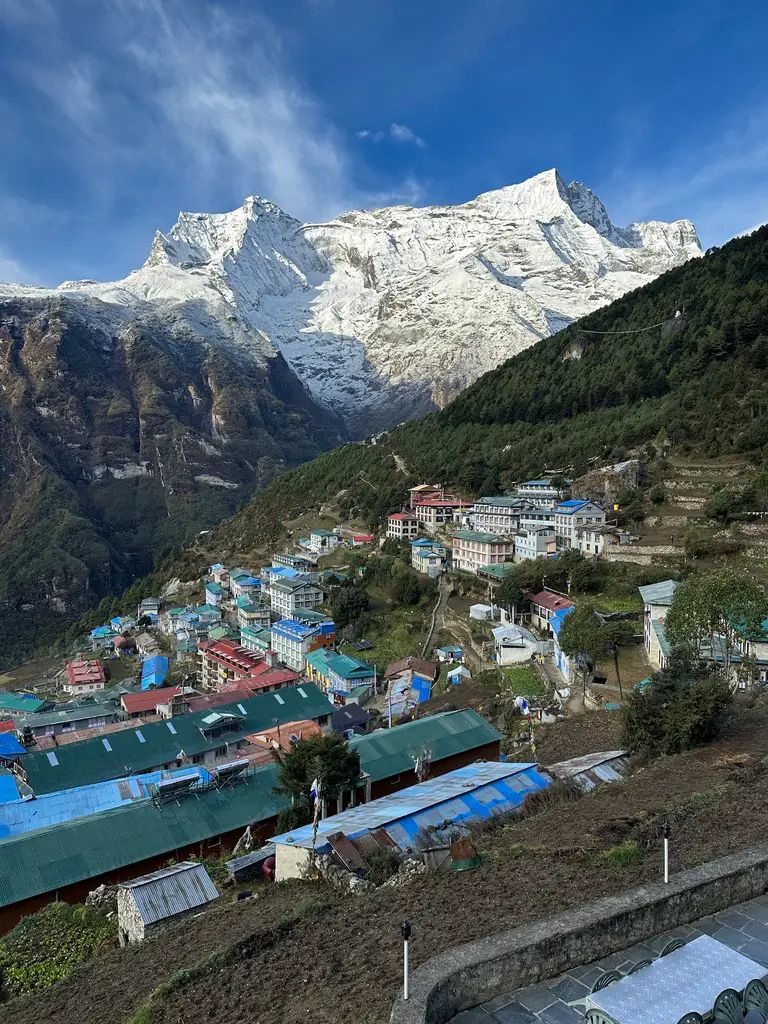
Lukla to Namche Trek
The Lukla to Namche Trek is where many Everest journeys begin, but it is also a complete journey on its own. You fly into...
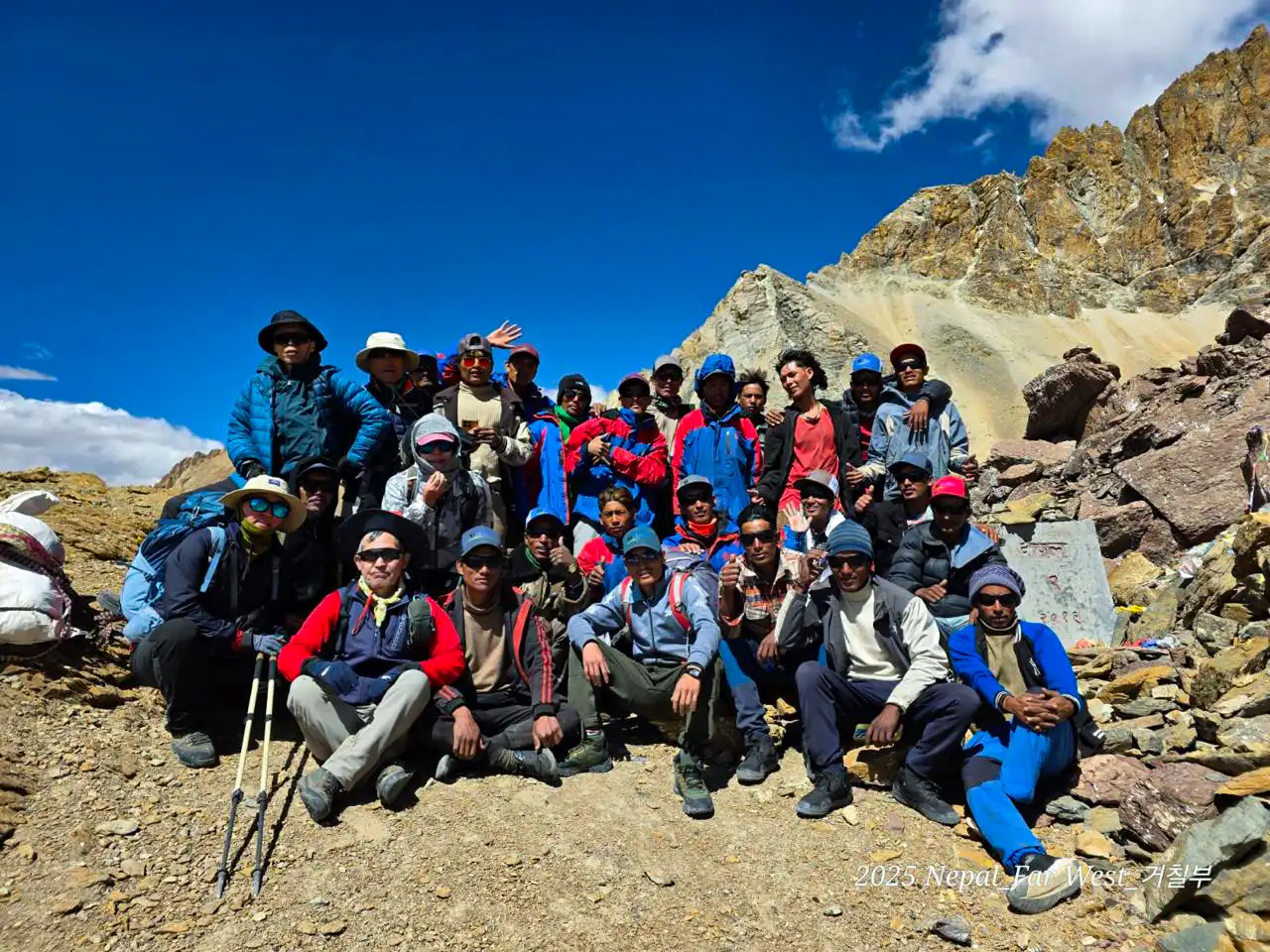
Nepal Has Two Faces. Most Trekkers Only See One. Everyone knows Everest Base Camp. Everyone has seen the photos of the Annapurna Circuit. They...
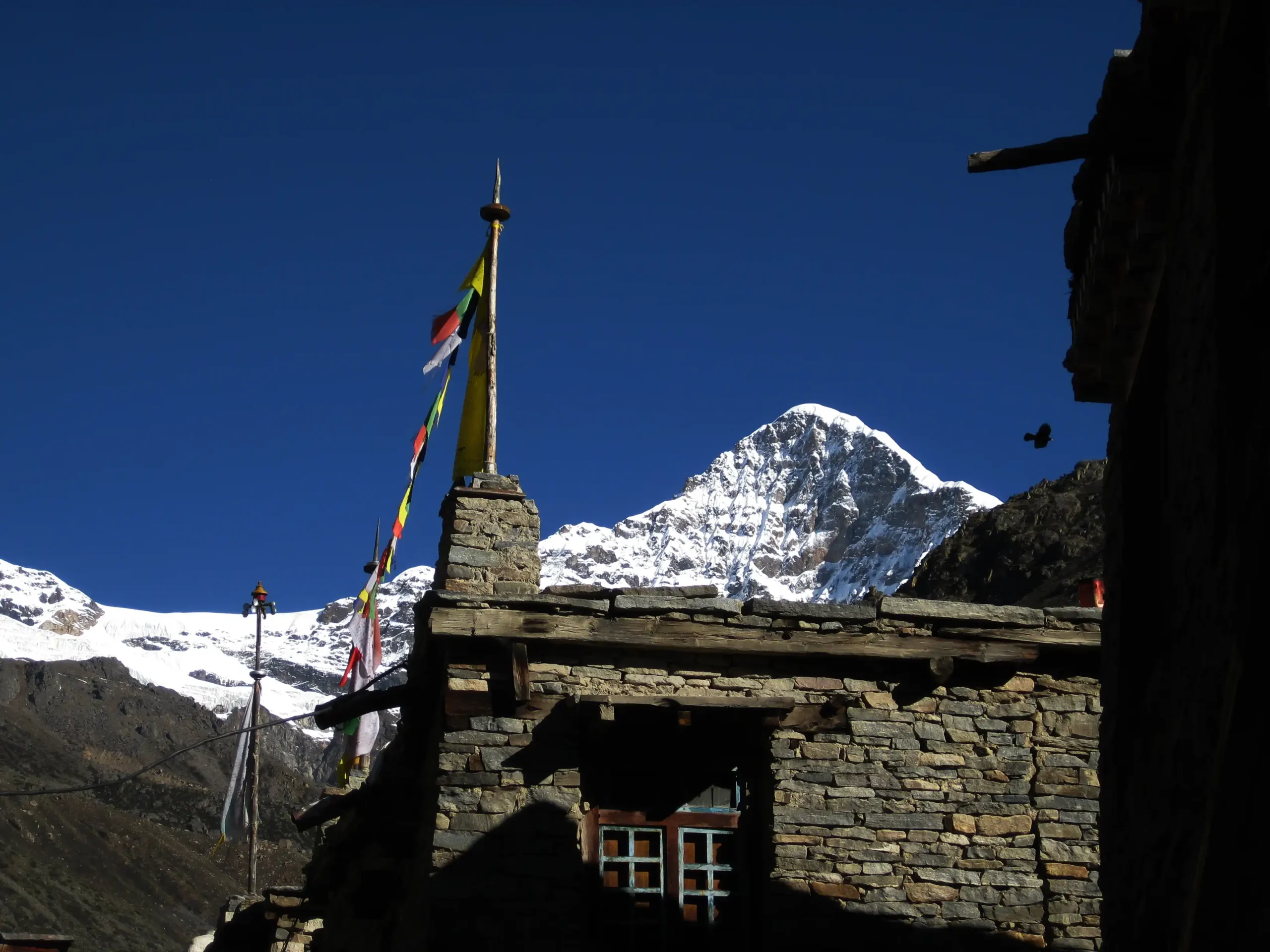
The Humla Limi Valley Trek is a 21-day remote camping trek in northwestern Nepal that follows ancient Tibetan trade routes through Halji, Til, and Jang villages. This restricted area trek crosses Nara La Pass (4,580m) and Nyalu La Pass (5,000m), offering authentic Tibetan Buddhist culture, Himalayan wilderness, and rare views toward Mount Kailash.
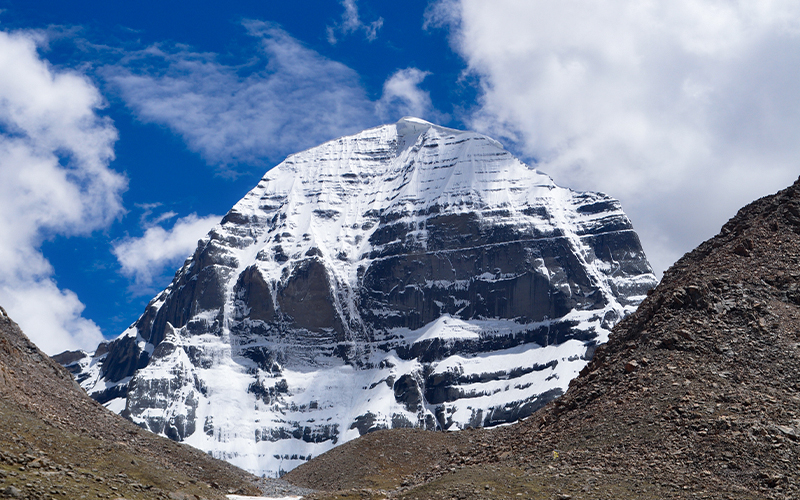
Kailash & Upper Humla Circuit Trek 2026: Start your spiritual journey to Mount Kailash and the remote Upper Humla region. Experience breathtaking Himalayan landscapes, unique Tibetan culture, and untouched wilderness. Trek safely with proper acclimatization, local guides, and essential gear for an unforgettable Kailash Yatra 2026.
