



Trip overview
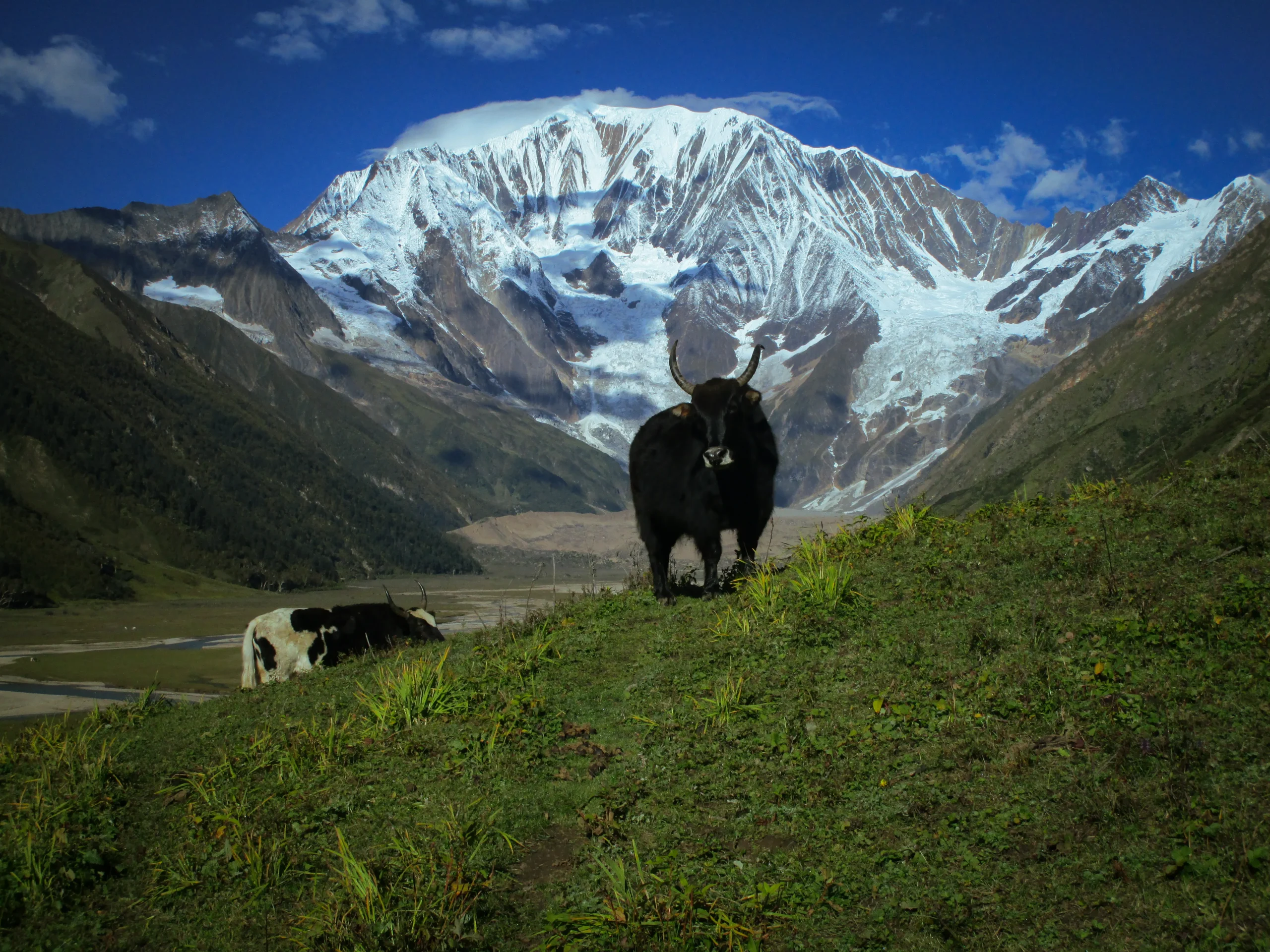
If you’re craving a true off-the-beaten-path Himalayan adventure, the Saipal Base Camp Cultural Trek delivers in every way. This 17-day journey takes you deep into Far West Nepal to the base of Mt. Saipal (7,031m), the region’s second-highest peak, famous for its striking pyramid shape and sacred aura. Far from the crowds of the Everest or Annapurna region, it’s a rare chance to explore pristine wilderness while connecting with communities whose traditions have barely changed in centuries.
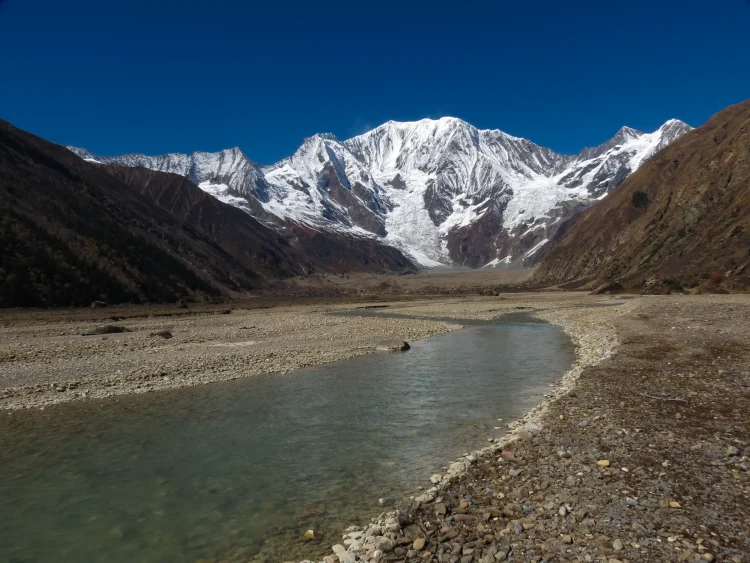
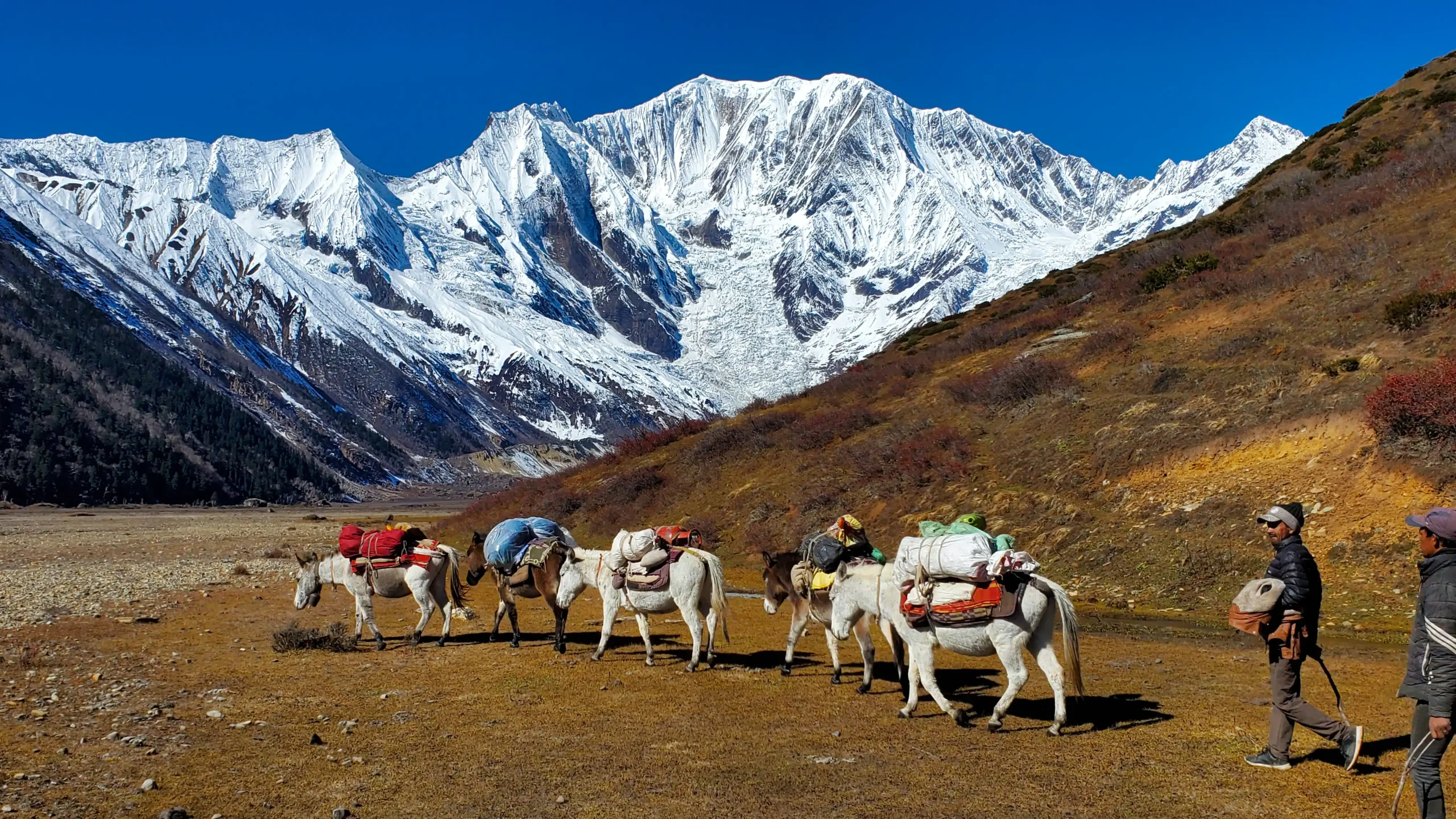
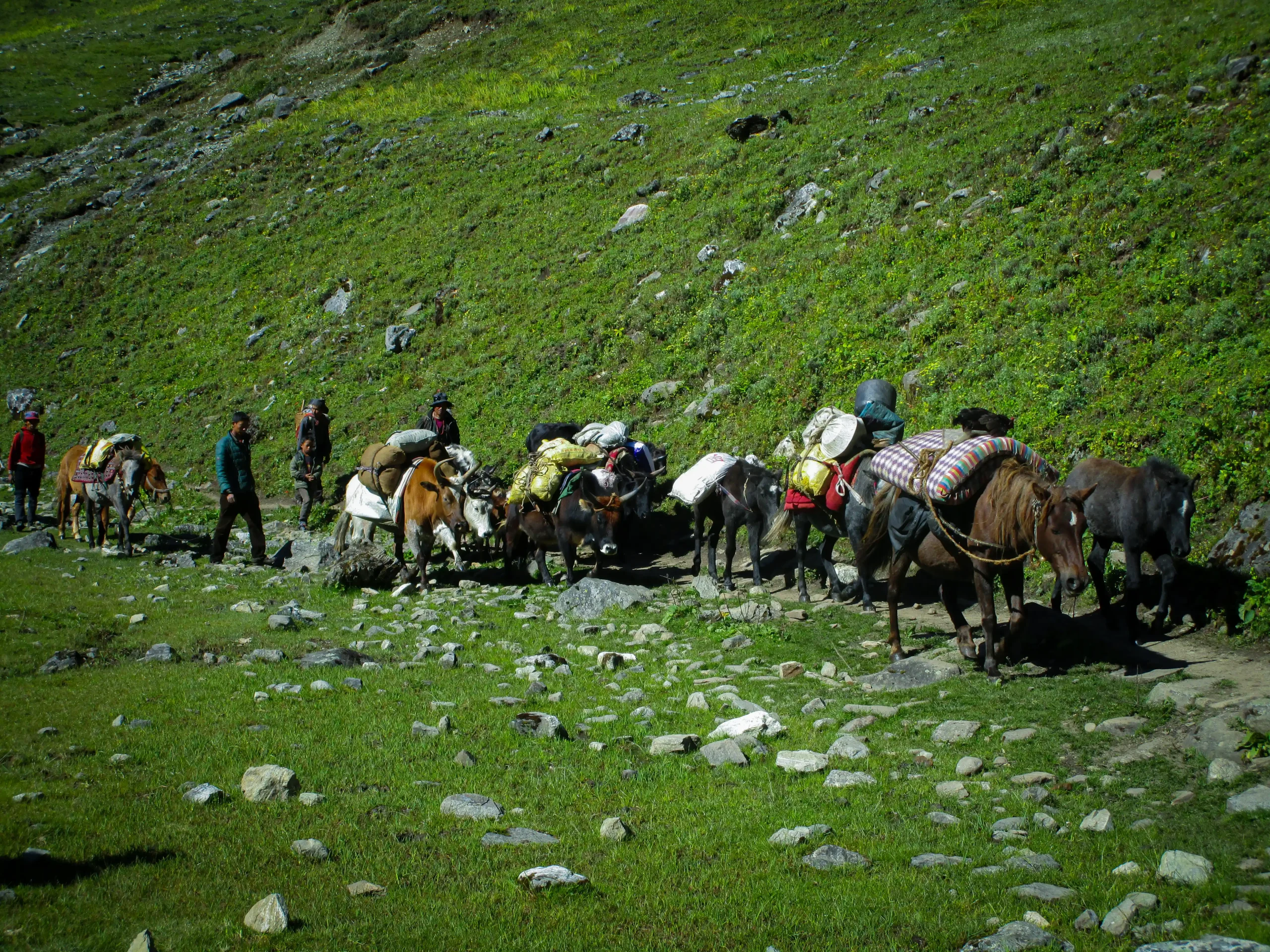
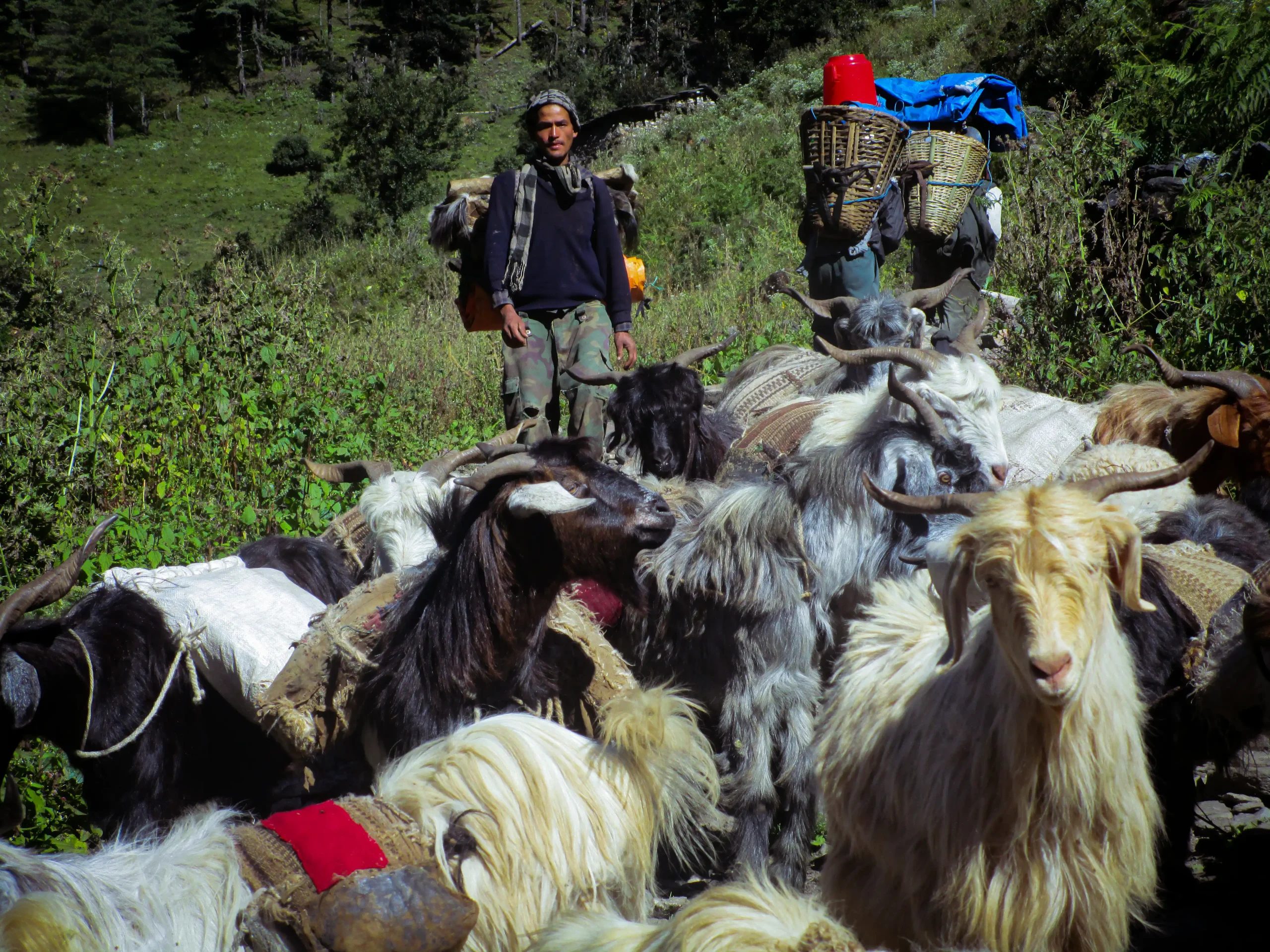
You don’t need previous high-altitude experience for this trek, just solid fitness, an open mind, and a love for genuine discovery. We start in Simikot (2,910m), the gateway to Humla, and soon enter the historic Nyin Valley. For generations, this valley served as a vital trade corridor between Nepal and Tibet, with yak caravans hauling salt, wool, and grain over high passes. Walking these same ancient trails today feels like stepping back in time, as local life still revolves around the rhythms of the seasons and the land.
Meeting the Nyinba People & Their Living Traditions
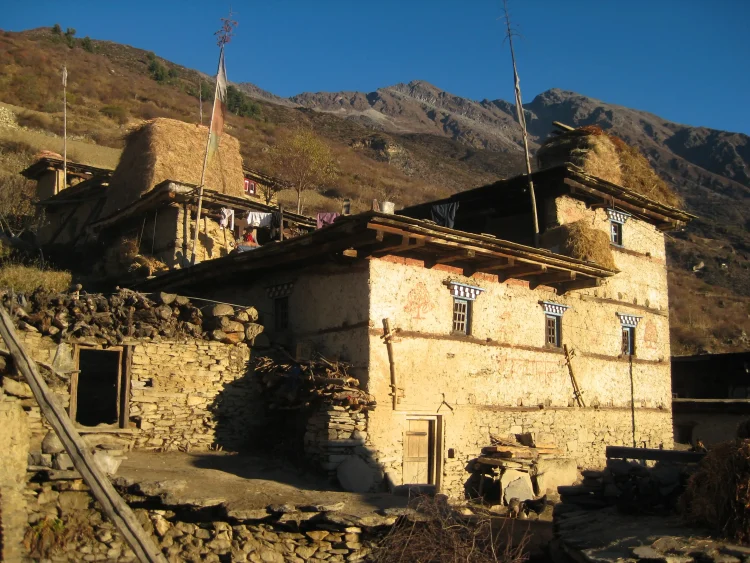
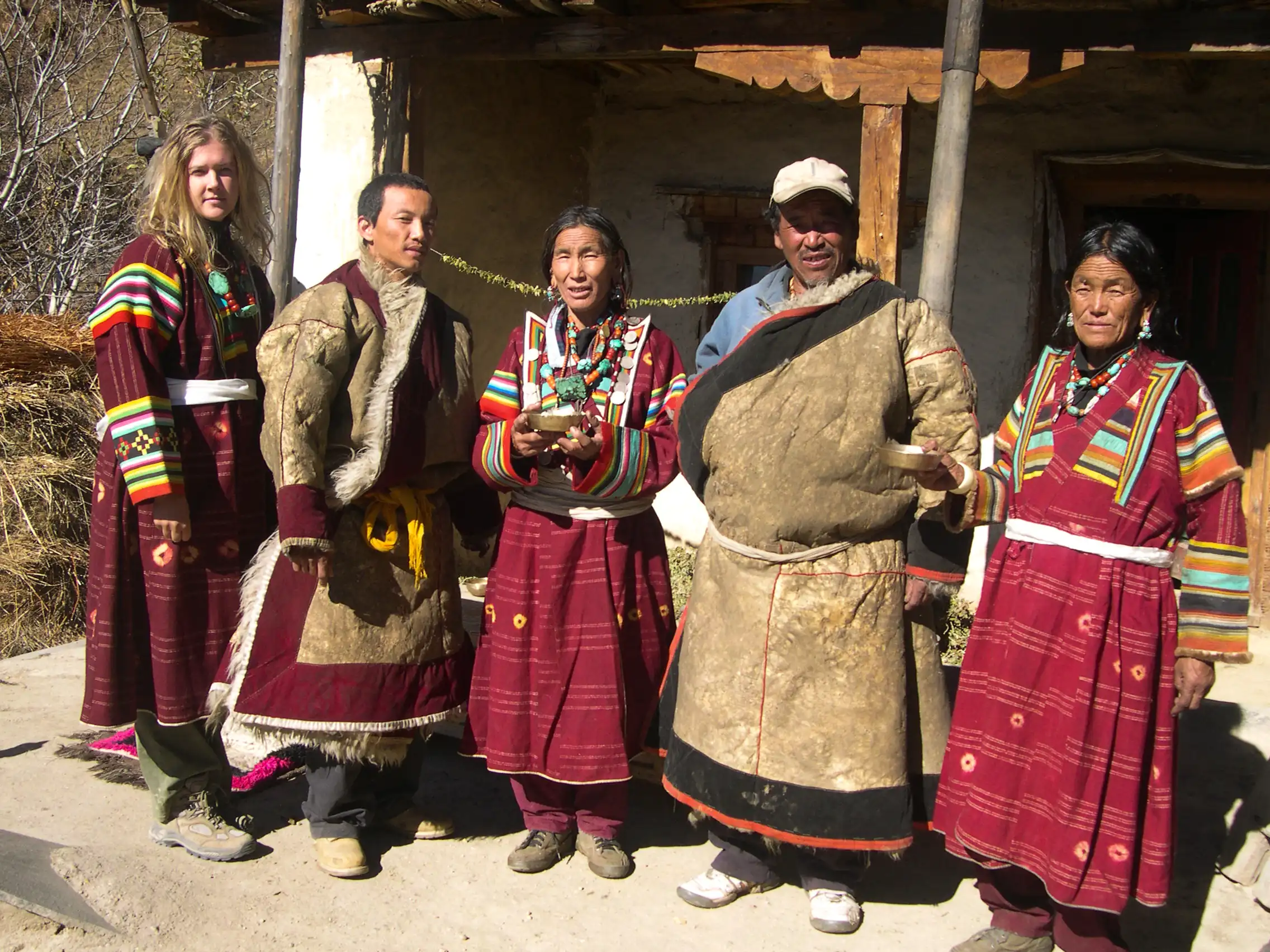
In the upper Nyin Valley villages, you’ll stay with Nyinba families, warm and welcoming people whose Tibetan Buddhist culture remains remarkably intact. Some households still follow the tradition of fraternal polyandry, in which brothers share a wife to keep family land and resources together in this tough, high-altitude environment. It’s a rare glimpse into a way of life that’s faded across much of the Himalayas. Visit ancient monasteries like Raling Gompa (around 4,000m), share butter tea and stories with elders, and witness daily rituals that feel deeply spiritual and timeless.
Diverse Villages, Landscapes & Daily Life
Lower down, along the Karnali River, Chhetri and Thakuri communities welcome you into their homes for authentic homestays. Their days center on traditional farming and herding, tending fields, milking yaks, and weaving stories around the fire. The trail itself is a highlight: winding through old-growth deodar and blue pine forests, blooming rhododendron in spring, open alpine meadows alive with grazing yaks, rushing rivers, and vast pastures under endless skies.
The Thrill of Sakya La Pass & Epic Views
The physical highlight comes when you cross Sakya La Pass (5,030m). The 360-degree panorama unfolds: Mt. Saipal dominating the foreground, flanked by Chang La, Crystal Peak, and distant glimpses of India’s Nanda Devi range. It’s one of those moments that makes every step worthwhile. On the return, we visit Yalbang Monastery. In one of Humla’s most important Tibetan Buddhist centers, you can join morning prayers, spin prayer wheels, and soak in the peaceful atmosphere after days in the mountains.
Why This Trek Feels Like a Hidden Shangri-La
What sets the Saipal Base Camp Cultural Trek apart is how uncrowded it stays. No long lines at viewpoints, no rush-hour trails. Just you, the mountains, and genuine encounters with locals who share their lives openly. Many who join us call it Nepal’s last true hidden gem: unspoiled nature paired with deep cultural connection, all in meditative solitude.
In the end, this 17-day journey is more than a trek. It’s a window into a vanishing Himalayan world, blending breathtaking scenery, meaningful cultural exchanges, and real wilderness adventure. If you’re seeking remoteness, authenticity, and something far from the mainstream paths, the Saipal Base Camp Cultural Trek stands out as one of the most rewarding experiences in Nepal’s far western Himalayas. Ready to step off the map?
Saipal Base Camp Culture Trek Highlights
- Jaw-dropping views of Mt. Saipal (7,031m) – the second-highest peak in far western Nepal, with its unique pyramid shape rising dramatically over the remote landscape.
- Crossing the high Sakya La Pass (5,030m) – the trek’s big scenic reward, with epic 360° panoramas of Saipal, Chang La, Crystal Peak, and even the distant Nanda Devi range in India, surrounded by fluttering prayer flags.
- Deep dive into rare Nyinba culture – meet the warm Nyinba people in upper Nyin Valley villages, learn about their Tibetan Buddhist traditions, and hear about fraternal polyandry (a traditional practice where brothers share a wife to protect family land in this tough high-altitude life).
- Walking ancient trade routes in the historic Nyin Valley – follow the same paths yak caravans once used to carry salt, wool, and grain between Nepal and Tibet, feeling the living history along the way.
- Genuine homestays with local families – stay with welcoming Chhetri and Thakuri communities in lower villages, sharing home-cooked meals, butter tea, and stories of traditional farming and herding life.
- Exploring ancient Buddhist monasteries – visit sacred spots like Raling Gompa (around 4,000m) and Yalbang Monastery (one of Humla’s largest), where you can join prayers, see colorful murals, and experience peaceful spiritual vibes.
- Untouched wilderness and stunning scenery – trek through old deodar and blue pine forests, rhododendron areas, alpine meadows with grazing yaks, rushing rivers, and wide-open pastures – all in peaceful solitude.
- True off-the-beaten-path feel – no crowds or commercial trails, just pure remoteness and the sense of discovering a hidden Shangri-La in Far West Nepal.
- Beginner-friendly high-altitude adventure – no prior trekking experience at altitude needed; just good physical fitness and an adventurous spirit for this rewarding 17-day cultural journey.
Saipal Base Camp Culture Trek Itinerary
Expand AllArrival in Kathmandu
Welcome to Kathmandu, the capital of Nepal. When you arrive a private car will take you directly to your hotel. You may want to rest for a bit after your flight and refresh yourself before we start your adventure.
Kathmandu is a colorful city rich with culture and temples and history. Depending on your arrival time, you might even have time to explore nearby markets or streets or sit in your hotel and relax. This is a great way to begin your trek before we leave for the Humla and the farway Saipal region!
Fly From Kathmandu to Nepalgunj
Today you’ll board a flight from Kathmandu to Nepalgunj, which acts an gateway to western Nepal. If the weather allows, you can see the Annapurna and Dhaulagiri mountains range from the plane. It works best to sit on the right side of the plane for this view if you want to catch everything from the plane.
You may then check in to a hotel to rest and prepare for your last flight to Simikot to begin the Saipal Base Camp Trek.
Flight to Simikot – Trek to Buraunse Gompa and Village (2,910 m)
Your journey to Humla begins with a short flight from Nepalgunj to Simikot, which lasts 45-50 minutes. You will then dive into the tranquil Nyin Valley, following a rugged path through forests of pine and juniper with orange berries from seabuckthorn fruiting all through the forest. Small streams cross the trail to heighten the refreshing atmosphere.
After an approximate two-hour trek, you will arrive at Buraunse Gompa(3,430m), a quiet monastery that serves as an appropriate place for a short lunch break. The trail then descends for approximately an hour to the village of Buraunse(3,100m), where arrangements will be made for local homestay accommodation. You will feel welcomed by the village and the simplicity of life here adds to the authenticity of local life which is a memorable first experience of life in Upper Humla.
Passing through the Nyin Valley, surrounded by seabuckthorn, juniper, and pine, the harmony between nature and local culture becomes clear. The first day in Humla has set the tone for the weeks ahead in an authentic glimpse into the tranquil beauty and traditional lifestyle of a remote area.
Trek From Buraunse to Nimatang (3,325 m)
Leaving Buraunse, you first walk across a wooden bridge spanning the Ghatte Khola, which flows rapidly below you. Afterward, you begin walking uphill through terraced hills featuring mani walls and small stupas; these showcase the valley’s Buddhist traditions.
Next, you pass through Chhyangla, which is known for its views of Simikot, and other snow-capped peaks in the distance. All along the trek today and throughout the Nyin valley, you will meet the Nyinba people and observe their way of life, including their grazing animals.
The trail will eventually arrive at Kangni (Gate Stupa), which is the entrance to Torpa village. This village features stone homes; prayer flags, and the humble Bhibuck cave that is used for meditation purposes. After your time at Torpa, you will walk past Hutick Village and reach Nimatang (3,325m), another small Nyinba village where you will spend the night in a homestay. You will be in a quiet place near forests of pine, juniper, and seabuckthorn. It is such a nice way to pass the time; rest and experience life in a rural village.
Trek From Nimatang to Raling Gompa(4,000m) – Back to Nimatang
Today, the trek from Nimatang to Raling Gompa(4,000m) has a nice balance of nature, culture and history. The trek starts with crossing an iron bridge over a snow-fed stream, a refreshing part of the walk. The trek then ascends gradually uphill through the forest surrounded by juniper and pine trees, that creates a fresh woody scent and pleasant atmosphere.
Initially along the trip, we stop by to visit Milarepa Cave; a very sacred site where the Tibetan yogi Milarepa, is said to have meditated. After referring to Milarepa Cave, it would be a short 15–20-minute walk to reach Raling Monastery (Raling Gompa), where it is one of the region’s oldest monasteries. As you walk toward Raling Monastery, you are treated to mountains surround you, illustrating the quaint and serene natural beauty of the area. This will be an excellent opportunity to enjoy your packed lunch while taking in the calming environment at the monastery.
During Jesth or full moon (mid-May to mid-June, which is also called Saga Dawa month), the monastery hosts a festival with worshiping, singing and dancing by and of the Nyinba and Kash people. This is quite a vibrant festival to witness and be part of the local ways!
In the afternoon, we trek back to Nimatang over about 2-3 hours.
Trek from Nimatang to Bargaun – Kharpu – Yangchu (2,200 m)
Bidding farewell to Nimatang, continue down the valley. After about 2 hours of trekking, You wil arrive in Bargaun, which is the last settlement of the Nyin Valley for this Trek. This is a good place to stop for lunch and take in the quiet atmosphere before heading on.
From this point the trail follows down towards the village of Thehe, which is one of the largest villages in Humla with around 800 houses. Walking through here is an entirely different feeling as a blend of customs and daily living is being showcased, where the cultural landscape changes from the Buddhist Nyinba people to the Kash communities that are a combination of both Hinduism and Shamanism. Shortly after you will walk for 2 more hours to arrive at Kharpu.
From here, walk 1 hour to reach Yangchu. Our campsite is situated close to the Karnali River, next to a natural hot spring making it a great place to stretch out weary legs and soak in the warm waters before we settle in for the night.
Trek from Yangchu to Ripghat via Siyalbadi and Sunakhar (1,900m)
This will be another long walking day, approximately 8 hours in total. The trail leads from Yangchu past Siyalbadi, a Dalit village, and this is one of the first areas you start to notice a cultural change into Hindu communities. In this area, you will begin to come across Hindu families who have their own culture and traditions. It’s noteworthy to mention that the people in this area are warm and welcoming, always smiling. Walking through the villages in this area provides a refreshingly unique cultural experience, quite different from the Buddhist valleys earlier in the trek.
After approximately 5 hours of walking, we will stop in Sunakhar for lunch, which will be welcome after a long morning’s walk through a lively settlement. After lunch, we continue walking for just over an hour to Chharia bridge, cross the river, and then add another hour on, to Ripghat. The campsite is set up near Rip Khola, where the flat fields will provide a perfect overnight camp.
This day will be a memorable combination of long walking hours, encountering different cultures, and the everyday hospitality of the Hindu people in this part of the valley. On this day you will make a more meaningful connection with the diversity of life than travelling in Humla.
Trek from Ripghat to Pipleri and Kheta (3,500 m)
The trek today is long, taking about 7.5 hours in total, but also rewarding. The hike starts with a steep climb of about an hour from Rip village to the main trail. For the next 4 hours you will continue uphill to Pipleri and lunch and rest.
In the afternoon you will follow the trail even deeper into the mountains. Climb for about 3.5 hours through dense forest, enjoying fresh mountain air and birds, until reaching the campsite at Kheta (3,500 m).
This part of the trail is known for its raw wilderness. We heard that past groups have spotted swarms of wild bees in this area, so just be safe and carry your basic medication with you and be a little careful. Overnight at Kheta.
Trek from Kheta to Deri Pass (3,800 m) and Lampata (3,600 m)
As you leave Kheta, the trail climbs steeply and consistently for around 2 hours, to reach the Deri Pass (3,800 m). Once at the pass, you get an incredible 360° view of Mt. Saipal and all the other ranges of the Himalayas around you. The scenery here is truly remarkable, and one of the most memorable highlights from the trek!
From the pass, descend about 2 hours to Kawadi Khola, with lunch nearby the river. You will hike approximately 3 more hours of gradual walking to reach Lampata (3,600 m), officially entering Bajura District.
Many Hindus/members of Chhetri communities reside in this area, who have lived here for generations, with their own unique and distinct culture and traditions that are different from Nyin Valley. Their way of life has a complexity of simplicity, with traditional customs, yet one thing always remains the same, you are always greeted with a warm smile with respect. It was enriching and different to meet these friendly people, because the trek was not only about the mountains, but about the diversity of different cultural exchange.
Overnight at campsite in Lampata.
Trek from Lampata to Ranikharka via Antraghat (3,900 m)
Today’s trek is about 6.5 hours in total length and is a great combination of natural wonder and total Himalayan adventure.
Today you will hike up towards Antraghat for about 3.5 hours of climbing to reach a great stop for lunch by a traditional wooden bridge. The views along the route are stunning. The canyons are incredible, you will see beautiful waterfalls, and glimpses of glacier crossings, which give a real sense of wilderness.
After lunch, you will hike up for another 3 hours towards our destination of Ranikharka (3,900 m). The trail is absolutely contorted and covers rugged terrain and alpine scenery. It is challenging, but worth every minute and step! Ranikharka is a great camp site and the mountains are dramatic in all directions and a fantastic example of lost and raw high-altitude scenery. Camp here feels like you are in the centre of the Himalayas!
Overnight camping in Ranikharka.
Rest Day – Hike to Nunkharka Glacier Lake (4,000m)
From the Ranikharka campsite, you can get great views of the east face of Saipal Himal. Today is a relaxing day, and a good resting day with opportunities to enjoy the surroundings.
You will take a short hike to the Nunkharka Glacier Lake (4000m), which is a beautiful lake underneath Saipal Himal, and allows you an opportunity to experience the back of Saipal up close. The hike is easy – about 2 hours uphill and 1.5 hours back – and is surrounded by alpine slopes and wilderness.
At the lake you will enjoy a packed lunch, explore the glacier moraine, and appreciate the mountain scenery. The view to Saipal Himal from the actual lake is remarkable and makes for some truly incredible photographs.
In the afternoon you will return to Ranikharka camp to relax and reflect on the natural beauty that the Humla region has to offer.
Networking camping at Ranikharka, in front of the grandeur of Saipal Himal and the simplicity of wilderness.
Trek from Ranikharka to Chala Khola(3,800m) via Sakya Lagna Pass (5,030 m)
Today is a long day, with about 8 hours of trekking. The trek will first take us 4 hours up to the top of Sakya Lagna Pass (5,030 m) and you will cross several rivers over the course of the day – sometimes there are no bridges and it adds to the adventure.
After getting to the pass, you will steeply descend for the next 2.5 hours to Labukdepsa. In this area, trekking poles are recommended, as the rocks can be loose or uneven with height gain and loss.
After Labukdepsa, walk 1.5 hours on mixed terrain to reach the riverside campsite at Chala (3,800 m). You will have an option to chill by the river and take in the peaceful mountain environment and get some well-deserved rest after a long day in the heart of Humla.
You will spend the night camping at Chala, with a quiet valley surrounding you and a dramatic Himalayan landscape.
Trek from Chala to Yalbang, via Chala Pass (3,060 m)
Today’s trek is around 7 hrs, blending together mountain spectaculars with culture. The trek will take around 1 hr 45 minutes from Chala to Chala village, and then another 1 hr 45 minutes uphill trek to Chala Pass. When you arrive at Chala Pass, you will be rewarded with stunning views of the mighty Mt. Gurla Mandhata, and most importantly, the Mendun Himal in the distance on the Nepal-Tibet border.
After spending some time at Chala Pass, it is a 30 minute descent down to our lunch spot, and then a very steep 1 hr downhill trek down to Puya village. From Puya village, the trail continues for 1.5 hours to cross the Karnali Bridge, which is one of the major crossings in the region. A final short trek down for about 30 minutes, and you arrive at Yalbang, where you will camp near the serene sites of Yalbang Monastery, which is one of the largest monasteries in Humla, and is an important spiritual center for the local butcher community people. You’ll also be sleeping here for the night, which gives you a uniquely rare opportunity to experience rowdy cultural and spiritual life in the middle of the mountains.
Trekking from Yalbang to Kermi via Salli (2,670 m)
Today will be around 5 hours of total walking time. You will take off from Yalbang and walk for about 2.5 hours through pine tree and oak tree forests before arriving at Salli. Salli is a small village where you will have lunch. On the way to Salli, you will see terraced fields, traditional houses, and local people going about their day. This will deepen your understanding of the rural lifestyle of the Humla Region.
After lunch, the trail to Kermi is another 2.5 hours away. Kermi is a village with natural hot springs, and some trekkers have told us that jumping in the hot springs is one of the most refreshing experiences of their entire trek. Given that you have walked in high in the Himalayas for the last few days, there is a good chance that immersing your body or just your legs in the warm mineral waters of the Kermi Khola will feel relaxing and restorative to your tired muscles.
You can expect to set up camp near Kermi and be surrounded by agricultural farms and views of mountains. The evening will be tranquil and inviting, potentially allowing for encounters with local families who live simply and maintain a lifestyle rooted in traditions.
Trek From Kermi to Simikot via Darapari, Majgaon, and Lagna Pass (2,910 m)
Today is the last trek of our 17 days of trekking. It will probably take about 7 hours. After a gentle 3 hour walk to Darapari through small hamlets and terraced fields, it is another hour to Majgaon where we can take a short break to rest and enjoy the views of Humla’s rolling hills. The next part of the trail will add some challenge with a continuous 2 hour climb to Lagna Pass. The good news is that once you reach the top, the view spans the valleys and peaks surrounding you. Hopefully, this will provide a great parting gift from the wilderness that we have experienced over the past two weeks.
Finally, you will descend for about 45 minutes to Simikot (2,910 m), the district headquarters of Humla. Here you will stay tonight in a guesthouse, with all the comforts of a warm bed and local food after many days in tent accommodations.
Today is a perfect way to tie up all the varied parts of the journey – mountains, local village life, and the overall sense of accomplishment on our return to Simikot.
Fly back to Kathmandu via Nepalgunj from Simikot
This morning, you will get on board a scenic flight from Simikot to Nepalgunj, which is a 45–50-minute flight taking you over Humla’s rugged valleys and snowy peaks. You’ll then board a short domestic flight from Nepalgunj to Kathmandu.
Coming back to the capital city after almost two weeks out trekking in one of the most remote regions of Nepal feels as if you have entered a whole new world. You’re free for the rest of the day; to relax at your hotel with a hot shower, or eat and shop in the bustling streets of Thamel if you are feeling adventurous, or even celebrate the trek with a classy meal in the evening… time to unwind
Note – Flights to and from Simikot are often dependent on the weather, hence, there can be delays and cancellations. Be sure to keep some flexibility in your travel plans.
Overnight stay in a hotel in Kathmandu.
Departure from Kathmandu
Today, depart from Nepal with a transfer to Tribhuvan International Airport according to your flight schedule as you board, you are not only carrying photos, but are carrying the memory of the remote valleys of Humla, the kindness of the local people, and the stunning face of Saipal Himal that will be with you forever.
Not quite satisfied with this itinerary?
No worries – every traveler has unique preferences, and we’d be happy to adjust the plan to match your style, comfort, and interests. Let us know what you’d like to add or change, and we’ll create a journey that feels truly yours.
Customize TripCost Includes
- All airport transfers
- 2 nights Kathmandu Hotel on a twin-sharing basis with breakfast
- 1 night hotel in Nepalgunj with full-board
- Nyin valley homestay accommodation and cultural dance
- Full Tented camping- accommodations during the trek
- All camping equipments and camping food
- Humla restricted area permit fee
- DDC tax
- An experienced Local guide and his salary and all transportation expensess
- Necessary porters or Mules
- First aid kit bag
- Farewell dinner
Cost Excludes
- Staff insurance
- International airfares
- Nepal visa fees (if applicable)
- Personal insurance, including evacuation and medical expenses
- Costs arising from flight cancellations, altitude sickness, or unforeseen circumstances (riots, natural calamities, etc.) beyond the control of Firante Treks and Expeditions Pvt. Ltd.
- Flight excess baggages charge
- Tips for staff and crew
- Beverage like, Mineral water- Bottle drinks, and Laundry
Additional Informations
Accommodation on the Saipal Base Camp Cultural Trek
This remote Far West Nepal trek features authentic, no-frills stays that match the off-the-beaten-path vibe—no luxury hotels, just genuine local experiences and safe camping.
- Homestays in Nyin Valley villages (e.g., Buraunse, Nimatang, Bargaun): Twin-sharing rooms in traditional Nyinba, Chhetri, or Thakuri family homes. Clean, basic bedding, shared bathrooms (bucket showers), and shared meals around the fire—think butter tea, dal bhat, and real conversations with hosts. These are the cultural heart of the trek.
- Tented camping in higher/wild sections (Sakya La Pass area, Nunkharka Glacier Lake, toward Saipal Base Camp ~4,200m): Full-service camps with insulated two-person tents, comfy mats, dining tent, kitchen, and private toilet tent. Our crew cooks hot meals, provides purified water, and sets up at scenic, safe spots. Camping under starry skies amid forests and meadows is a trek highlight.
- Guest houses in Simikot (start/end): Comfortable local lodges or guest houses with twin rooms, beds, hot showers (when available), and basic amenities—perfect for arrival/departure relaxation.
Trek Difficulty & Fitness
Moderate to strenuous – daily walks of 4–7 hours over uneven trails, with one big high pass day (Sakya La at 5,030m). No technical climbing, but expect steep ascents/descents, altitude gain, and basic facilities. Good physical conditioning is essential (regular cardio/hiking prep recommended). No prior high-altitude experience needed, but come prepared for cold nights and variable weather.
Best Time to Trek
Spring (March–May) for blooming rhododendrons and clear views, or autumn (September–November) for stable weather, crisp skies, and festival vibes in villages. Avoid monsoon (June–August) due to rain/landslides and winter (December–February) for heavy snow on passes.
Permits Required
- Restricted Area Permit for Humla (needed for Simikot entry).
- TIMS card or local trekking permit.
- National Park/Conservation fees if applicable. Firante handles all paperwork—bring passport copies and photos.
Trip Gallery
Trip FAQs
1. Is the Saipal Base Camp Cultural Trek difficult?
No technical skills needed, but it’s moderately strenuous. Expect 5–7 hours walking per day with one high pass (5,030m). If you can hike 10–12 km in hilly areas comfortably, you’re good to go. Perfect for fit adventurers without prior high-altitude experience.
2. Are there teahouses or only camping and homestays?
No teahouses after Raling Gompa. The trek uses authentic village homestays in Nyin Valley (Buraunse, Nimatang, etc.) + full-service comfortable tented camps in the higher sections. We carry everything – you just walk.
3. When is the best time for Saipal Base Camp Cultural Trek?
March–May (spring – rhododendrons blooming) and September–November (autumn – clearest views & festivals). Both seasons offer stable weather and stunning Saipal views.
4. How many days is the Saipal Base Camp Cultural Trek?
17 days total (including flights Kathmandu–Simikot–Kathmandu). Trekking days: 13–14. Perfect length for proper acclimatization and deep cultural immersion.
5. Is this trek still uncrowded in 2026–2027?
Absolutely. Even in 2026, we see maximum 10–15 trekkers per season in the entire Saipal region. You’ll often have the trail completely to yourselves – true hidden Nepal.
6. Will I see the Nyinba polyandry culture?
Yes, 100%. We stay multiple nights in upper Nyin Valley villages where some families still practice fraternal polyandry. Locals openly share their stories – it’s respectful, fascinating, and one of the last places on earth you can witness this.
7. Do I need restricted area permit for Saipal trek?
Yes – Humla is a restricted area. Firante Treks arranges everything (USD 500–600 permit fee included in package). Just send passport copies 30 days before.
8. Is it safe for solo female travelers?
Very safe. All our guides are from Humla, homestays are hand-picked family homes, and we’ve successfully run many solo female trips here. The communities are incredibly warm and respectful.
9. Can beginners do the Saipal Base Camp Cultural Trek?
Yes, if you’re reasonably fit and love adventure. Many first-time trekkers choose this over crowded routes because it’s more rewarding and never feels rushed.
10. Do I reach the actual Saipal Base Camp on this trek?
Yes, we go up to approximately 4,200–4,300m near Saipal Base Camp and Nunkharka Glacier Lake. You get incredibly close views of the pyramid peak without needing mountaineering gear.
You may also like

Everest Base Camp Trek
Everest Base Camp Trek: Experience the ultimate Himalayan adventure with breathtaking views of Mount Everest, Sherpa culture, and iconic monasteries. Perfect for thrill-seekers and nature lovers. Trek safely with proper acclimatization, expert guides, and essential gear.
Lukla to Namche Trek
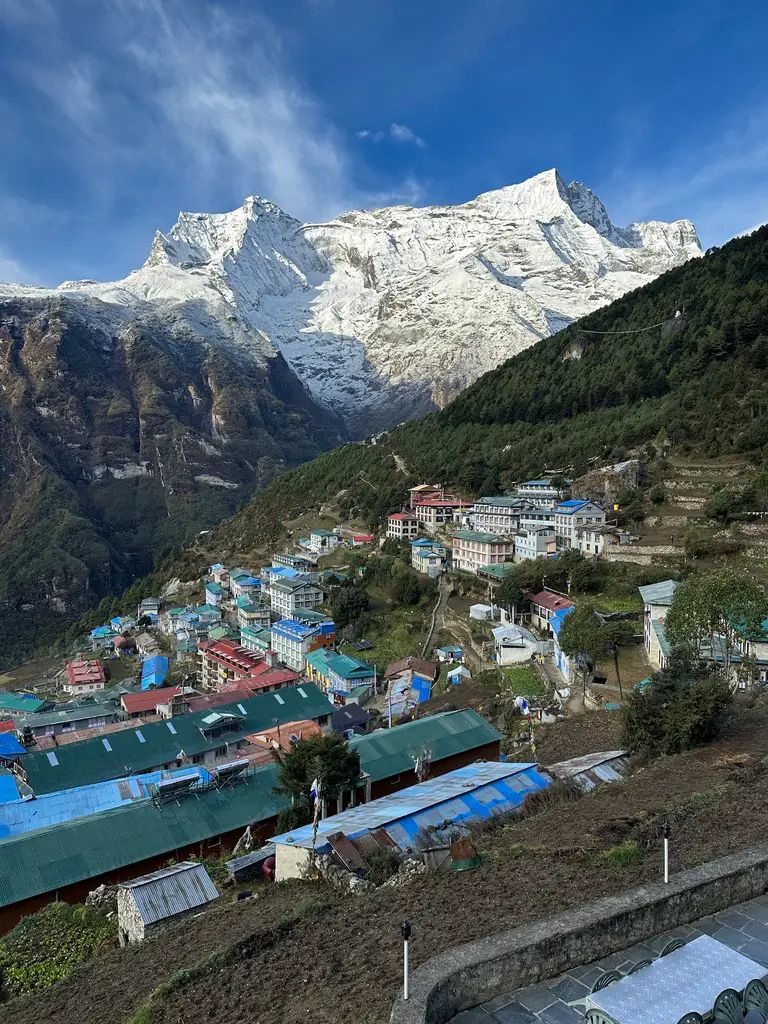
The Lukla to Namche Trek is where many Everest journeys begin, but it is also a complete journey on its own. You fly into...
Nepal Has Two Faces. Most Trekkers Only See One. Everyone knows Everest Base Camp. Everyone has seen the photos of the Annapurna Circuit. They...
Mane Festival Humla
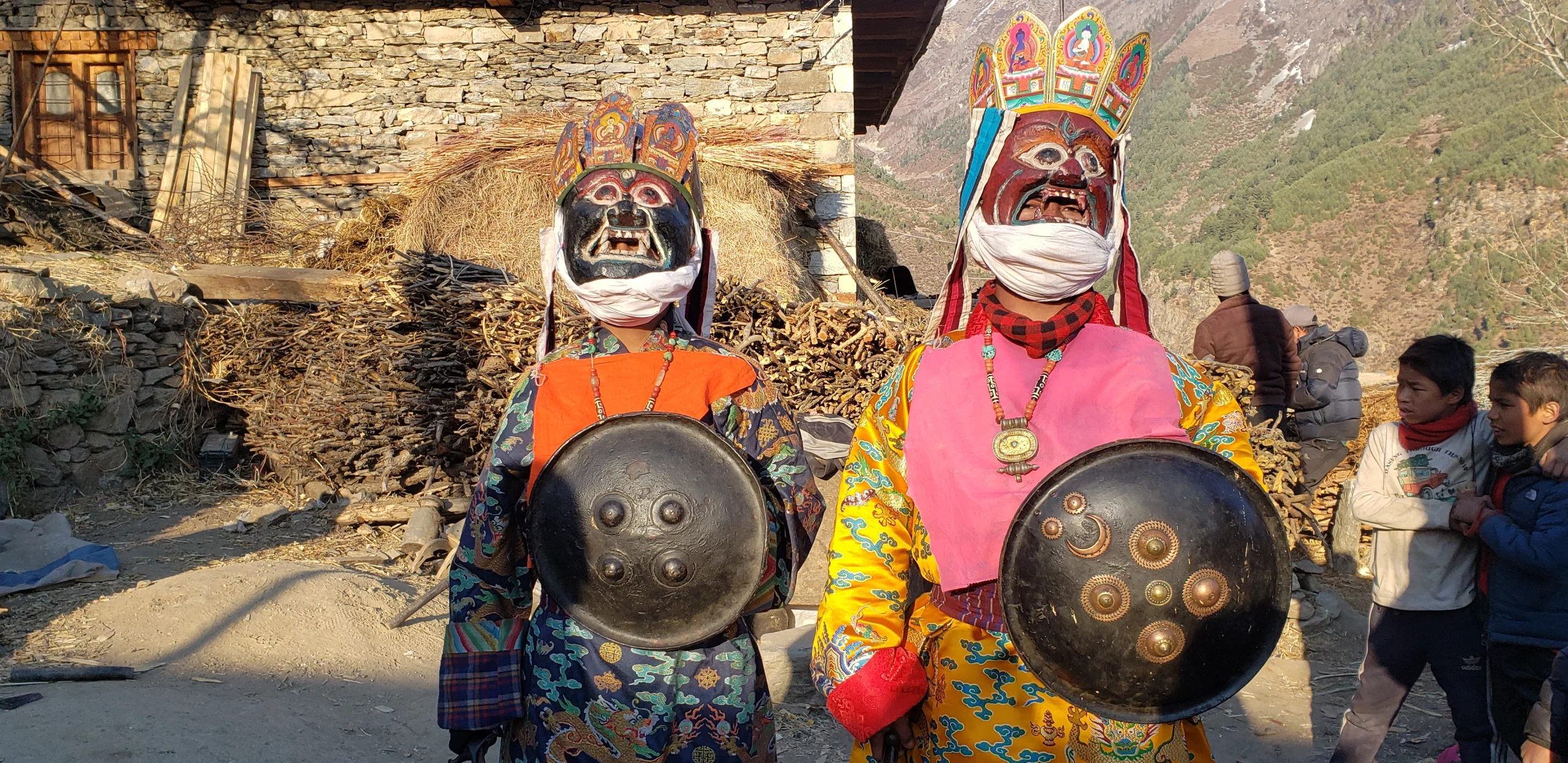
Mane Festival of the Nyinba community of Humla is one of the most unique festivals in Nepal. This festival reflects the lifestyle and traditions...
Langtang Valley Trek
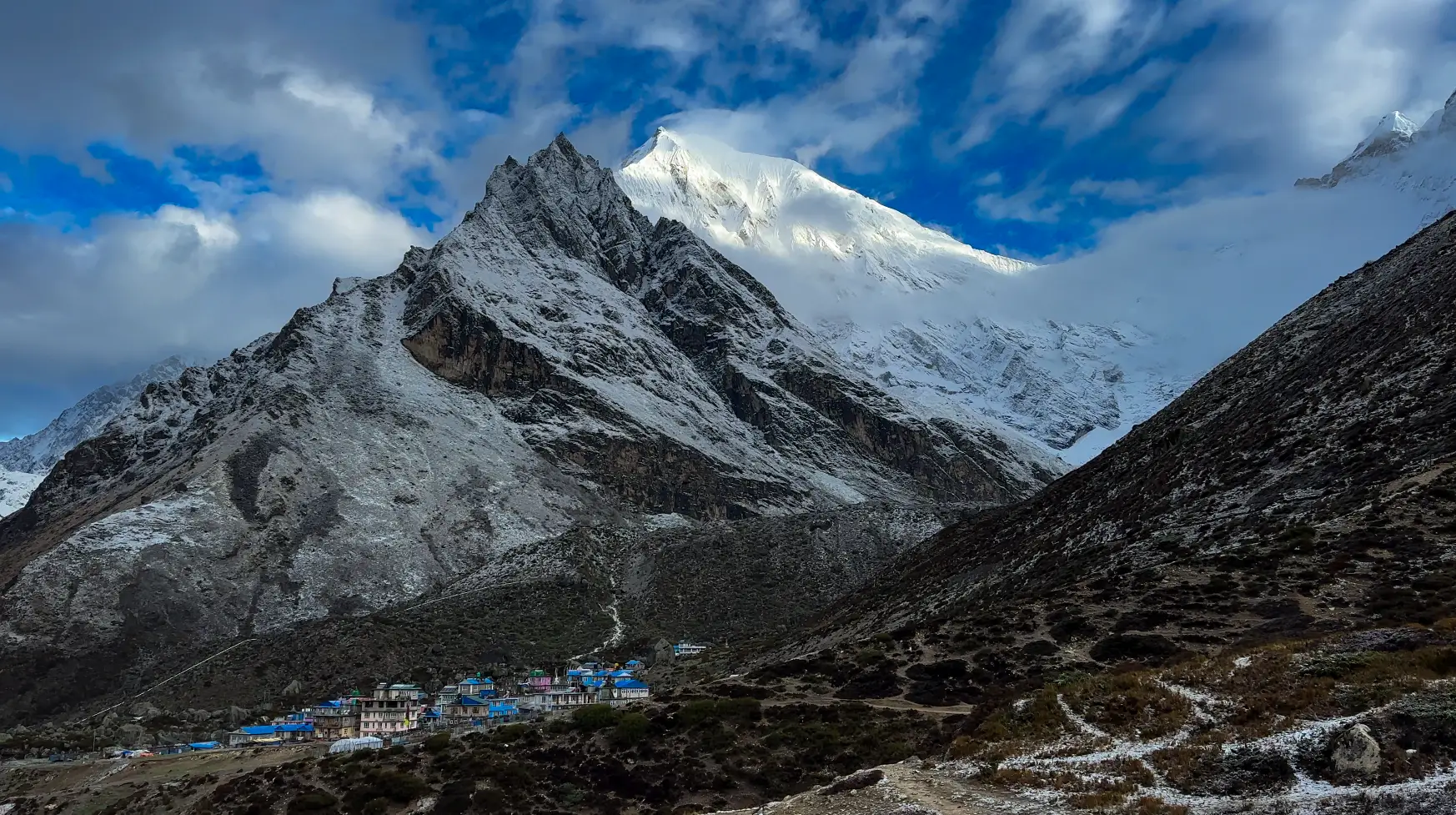
Overview The Langtang Valley Trek is one of Nepal’s most beautiful and accessible Himalayan journeys. Nestled just north of Kathmandu, the valley combines stunning...
