Buddhism & Mindfulness Luxury Tour Nepal is not about rushing from one attraction to another. It is about slowing down enough to actually feel where you are.
Most people travel to Nepal for the mountains.
This journey is for something softer. Something quieter. Something deeply personal.
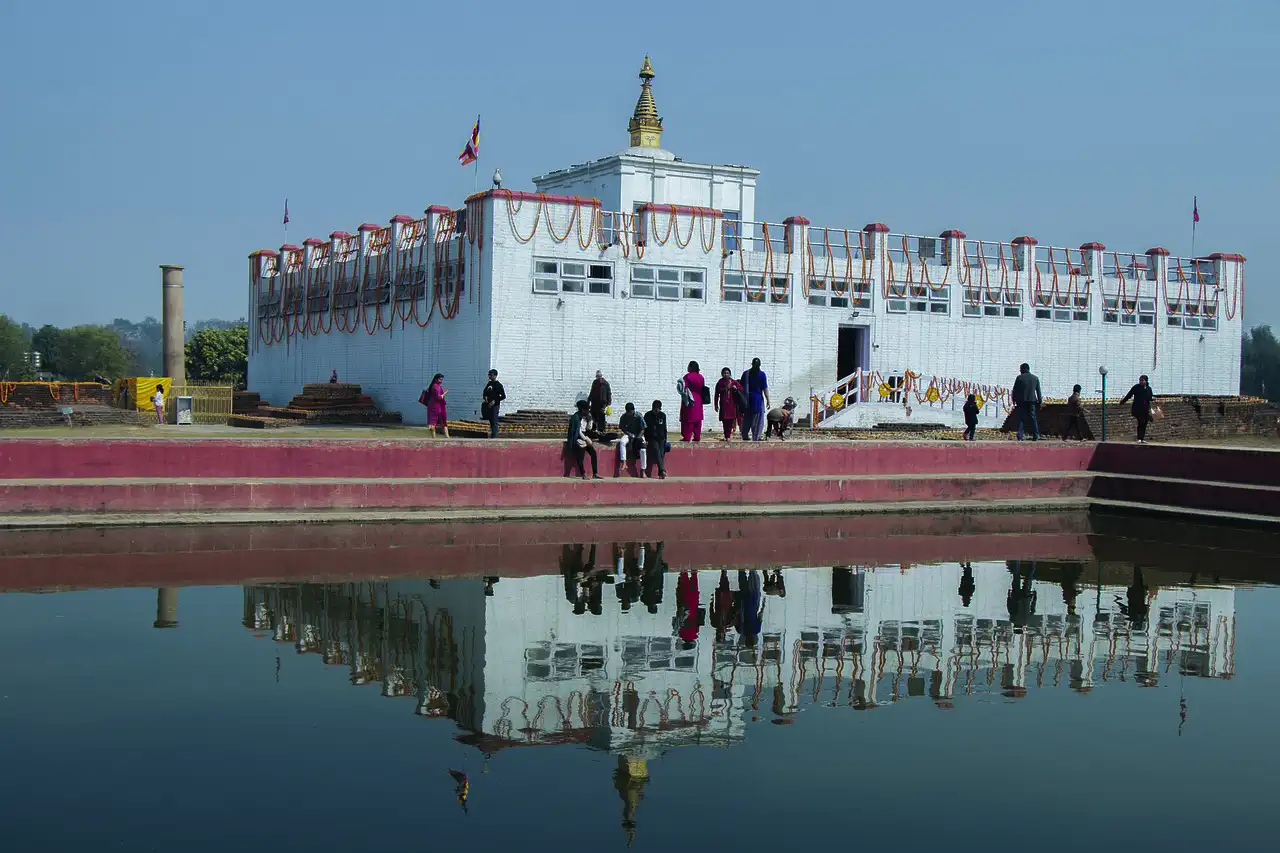
Over ten gentle days, you move through some of the country’s most sacred sites. You walk with pilgrims around ancient stupas, sit in monasteries filled with low chanting, and stand at the exact place where the Buddha was born in Lumbini.
It is pilgrimage travel, but without hardship.
You stay in carefully selected luxury hotels, a peaceful organic farm, and a monastery guesthouse where evening prayers drift through the halls at night. Comfort is part of the experience, not something you trade away for meaning.
Some days are quiet and reflective. Meditation at sunrise. Time alone in temple courtyards. Conversations with a Buddhist teacher.
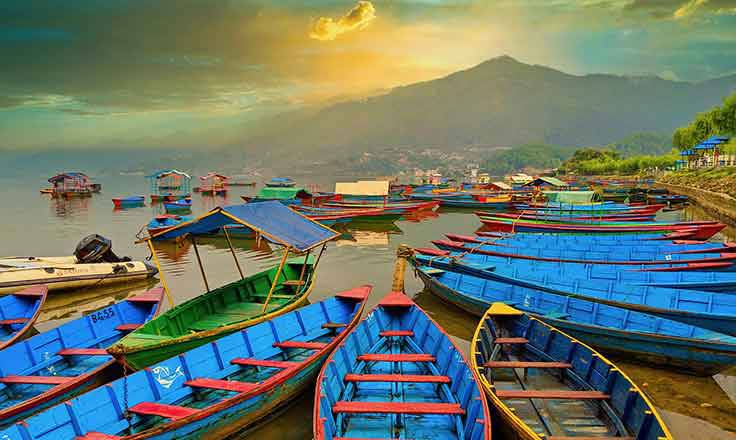
Other days feel quietly alive. A boat gliding across a still lake. Mountain light spilling across distant peaks. The deep vibration of chanting that settles somewhere inside you.
You do not need to be Buddhist. You do not need experience with meditation.
You only need curiosity and a willingness to slow down.
Why This Buddhism Pilgrimage Tour?
Nepal is the Geographic Heart of Buddhism
The Buddha was born in Lumbini, in what is now southern Nepal. The country holds not just historical sites but a living tradition; monasteries that have been continuously active for centuries, teachers who have studied since childhood, and rituals that have not been modified for tourist audiences. When you sit in a monastery here, you are sitting in the real thing.
Comfort without losing authenticity
Many pilgrimage tours make you choose between authenticity and comfort. This one does not. Tibet International Hotel places you steps from Boudhanath Stupa. Temple Tree Resort in Pokhara gives you the lake and the mountains. The farm stay in Palpa gives you something else entirely: organic food, open air, and a slowness that luxury hotels cannot manufacture. Each night’s accommodation is chosen for what it adds to the experience, not just for its star rating.
Private Meditation and Teaching Sessions
A dedicated Buddhist teacher accompanies the trip. Sessions are personal and unhurried. You can ask questions, learn practical techniques, or simply sit in silence.
Whether you are completely new to mindfulness or already practicing, the guidance meets you where you are.
Small Group, Personal Experience
This is not a coach-tour pilgrimage. The group size is intentionally small, the pace is considered, and the itinerary has enough flexibility to follow the energy of the group. If a morning meditation runs long because the space is right, it runs long.
Pharping
Few travelers visit Pharping, yet it is one of the most important Buddhist practice sites in Nepal.
Here you explore meditation caves linked to Guru Padmasambhava, the master who carried Buddhism into Tibet. Spending a night in a monastery guesthouse while monks chant nearby often becomes the most memorable part of the entire trip.
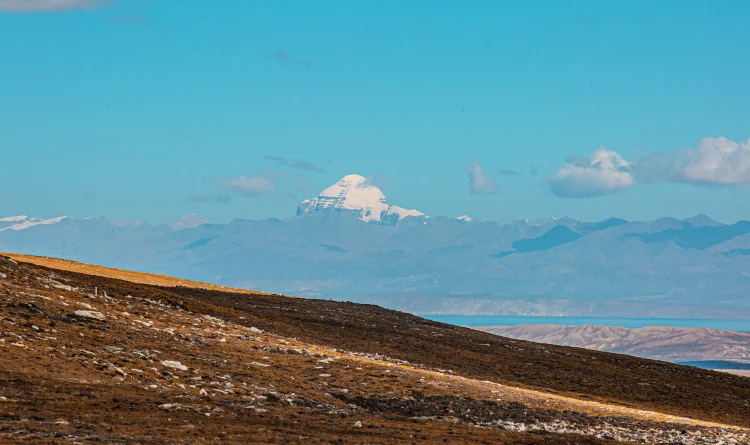
The Mount Kailash View Tour from Nepal takes you to Lapcha Syar Pass (5,133m) in remote Humla district, where Mount Kailash (6,638m) and Lake Manasarovar appear clearly across the Tibetan border, no Tibet permit required.
This is an 8-day alternative to the traditional Kailash parikrama. It’s designed for pilgrims and travelers who want the sacred darshan but can’t or don’t want to enter Tibet due to visa complications, higher costs, or physical demands of the full kora circuit. The journey combines short flights with rugged overland jeep travel through one of Nepal’s least-visited corners.
Mount Kailash is sacred to Hindus, Buddhists, Jains, and Bon followers as the spiritual axis of the world. From Lapcha Syar, all four symmetrical faces of the mountain rise clearly above the plateau. On good days, Lake Manasarovar (4,600 m) spreads turquoise below. Many pilgrims say the view alone completes their spiritual purpose.
From the heights of Limi Lapcha in Humla, Mount Kailash (6,638 m) and the turquoise expanse of Lake Manasarovar appear in quiet majesty – no border crossing required.
Why Choose This Kailash Tour Package from Nepal
No Tibet visa headaches.
This route stays entirely within Nepal. You avoid the Tibet Group Tourist Visa process, political restrictions, and the significantly higher costs of Tibet-side tours that require Chinese-approved agencies and fixed group departures.
Faster itinerary. The full Tibet kora takes 12-15 days minimum. This Nepal-side tour gets you to the viewpoint and back to Kathmandu in 8 days, making it practical for people with limited vacation time.
Moderate physical demands. While altitude is real (5,133m), the road access reduces trekking to a minimum. You drive to Dukling base camp at 4,000m, then take a final jeep approach to the pass. Suitable for anyone in decent health who can handle altitude.
Authentic Tibetan Buddhist culture. The route passes through villages where Tibetan traditions remain strong—active monasteries, prayer wheels, and communities that have lived along this trans-Himalayan trade corridor for centuries.
Firante Treks has run Humla expeditions since 2012. Our guides come from Simikot and surrounding villages, with firsthand knowledge of weather patterns, road conditions, and cultural protocols in this sensitive border region.
Journey Through Humla: The Road to Limi Lapcha Syar
After flying Kathmandu → Nepalgunj → Simikot (2,910m), the overland adventure begins. The 85km jeep route from Simikot to Dukling follows the Karnali River valley northward, climbing gradually through villages that mark the cultural shift from lowland Nepal to Tibetan Buddhist highlands.
Early stops pass stone-built settlements where Nepali is still spoken, but prayer flags and chortens start appearing along the roadside. After crossing the Hepka Khola bridge, you enter distinctly Tibetan influence Buddhist areas. Kermi village (2,700m) has natural hot springs along the river where many groups stop briefly to soak after dusty hours in the jeep. The whitewashed stupas and hand-carved mani walls here signal the cultural transition is complete.
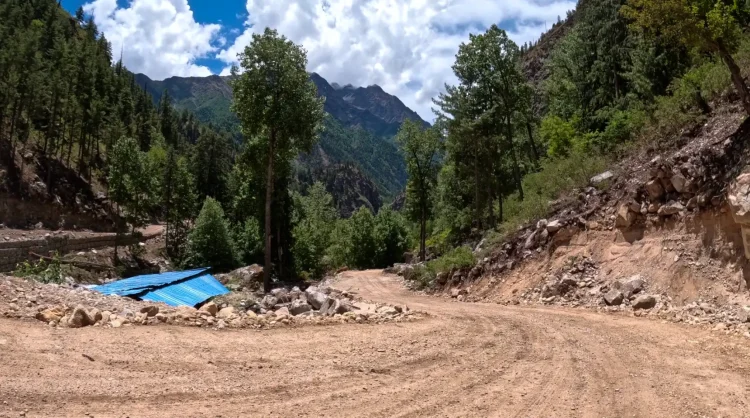
Humla’s wild overland route – the jeep path from Simikot to Limi Valley hugs steep valleys and barren ridges, leading to one of Nepal’s most isolated corners.
Further up, Muchu village sits near Yalbang Gompa(also known as Namkha Khyung Dzong Monastery), an active monastery visible from the road with sweeping views back down the valley. Monks maintain the gompa year-round, and if you pass during morning puja, you might hear chanting echo across the hills. Beyond Muchu, the landscape turns barren—less vegetation, more yaks grazing on sparse grass, and the air noticeably thinner above 3,500m.
The route continues through increasingly desolate high country toward the restricted border zone. Road quality deteriorates—expect washouts, river crossings, and sections where the jeep crawls in low gear. This is genuine backcountry; you won’t see other tourists. The 85km drive takes 6-8 hours depending on conditions.
Dukling (4,000m) is the staging point, a basic camp or guesthouse area where you overnight for crucial acclimatization before the final push. The altitude hits harder here—headaches and shortness of breath are common. Our guides monitor everyone closely and adjust plans if anyone shows severe AMS symptoms.
Day 5 starts before dawn. The rougher track from Dukling to Lapcha Syar Pass (5,133m) climbs through scree, switchbacks, and exposed ridges. Most jeeps take 3-4 hours. Then the pass crests, and there it is.
The Sacred View: Mount Kailash and Lake Manasarovar
Mount Kailash dominates the northern horizon from Lapcha Syar—a massive pyramid shape with four faces aligned to cardinal directions, layered in snow and dark rock. The Tibetan name is Kang Rinpoche (Precious Jewel of Snow). Hindus know it as Shiva’s throne. From about 20km across the border, the mountain appears both enormous and strangely intimate.
Lake Manasarovar lies below to the northeast, a deep blue or turquoise expanse (depending on clouds and sun) ringed by barren Tibetan hills. Hindus believe bathing in its waters washes away lifetimes of sins. Buddhists say Brahma created it with his mind. You won’t reach the lake on this tour, but seeing it from Lapcha Syar—still, reflective, utterly remote—is enough for most pilgrims.
Prayer flags snap hard in the wind. The air is thin and cold even in summer. Most groups stay 1-2 hours, taking photos, meditating, or simply sitting with the view before descending back to Dukling. Weather can change fast—clouds roll in without warning, so morning departures catch the clearest light.
This is the Kailash Mansarovar yatra reimagined—no parikrama, no ritual dips, just the darshan from Nepal’s edge.
Best Time for Mount Kailash Tour from Kathmandu
May to September offers the most reliable weather. Humla gets lighter monsoon than the rest of Nepal, but afternoon clouds can still hide peaks. Early June and September typically deliver the clearest skies with fewer groups on the route.
October can work if conditions hold, but nights drop well below freezing and snow may close Lapcha Syar by late month. April-May is marginal—roads may have lingering ice and clouds are common.
Winter (November-March) is not viable. Snow blocks high passes, guesthouses close in upper villages, and temperatures at Lapcha Syar hit -20°C or lower.
We monitor conditions through local contacts in Simikot and adjust departure dates based on current road status and weather forecasts. If Lapcha Syar clouds out on Day 5, we include buffer time or alternative viewpoints when possible, but peak views aren’t guaranteed—this is high-altitude wilderness, not a controlled tourist experience.
What Makes This Kailash Tour Package Different
Local expertise that matters. Our lead guide, Tenzin Lama, grew up in humla and has led over 40 Humla expeditions. He knows which guesthouse owners are reliable, where landslides happen after rain, and how to handle checkpoint protocols in the border zone. That experience is critical when you’re this remote with limited backup options.
Small groups, low impact. We cap departures at 8-10 people maximum. Large tour buses can’t navigate these roads anyway, and smaller groups move faster, cause less environmental strain, and keep the experience personal rather than transactional.
Respectful cultural approach. This is a pilgrimage route for Humla locals too, not just foreign tourists. We brief travelers on etiquette—asking before photographing people or monasteries, removing shoes at gompas, understanding that some sacred sites are places where outsiders are guests, not customers with automatic access.
Honest expectations. We don’t promise perfect weather or guaranteed Kailash views. Altitude affects everyone differently, roads wash out during monsoon, and clouds hide the mountain sometimes despite clear forecasts. We plan buffer days, carry emergency oxygen and pulse oximeters, and communicate clearly about risks before you book. If someone shows severe AMS symptoms, we descend immediately—no exceptions.
For many travelers, this glimpse from Nepal is enough—a sacred sight earned through genuine effort, not packaged convenience. For some, it becomes the most meaningful journey they’ve taken.
Health and Safety Considerations
Lapcha Syar sits above 5,100m. Acute Mountain Sickness (AMS) is a real risk, especially for those flying directly from sea level to Simikot (2,910m) in one day. Our itinerary includes overnight acclimatization at Dukling (4,000m) before the final ascent, but headaches, nausea, and fatigue are common even with gradual altitude gain.
Guides carry pulse oximeters to monitor oxygen saturation, plus first aid kits and supplemental oxygen cylinders. All guides are trained to recognize AMS warning signs—confusion, inability to walk straight, severe headache that doesn’t respond to medication—and will descend with anyone showing serious symptoms.
Medical facilities in Humla are extremely basic. Simikot has a small health post with limited supplies. Serious emergencies require helicopter evacuation to Nepalgunj or Kathmandu, weather permitting. We strongly recommend comprehensive travel insurance that covers high-altitude rescue (above 4,000m) and emergency medical evacuation.
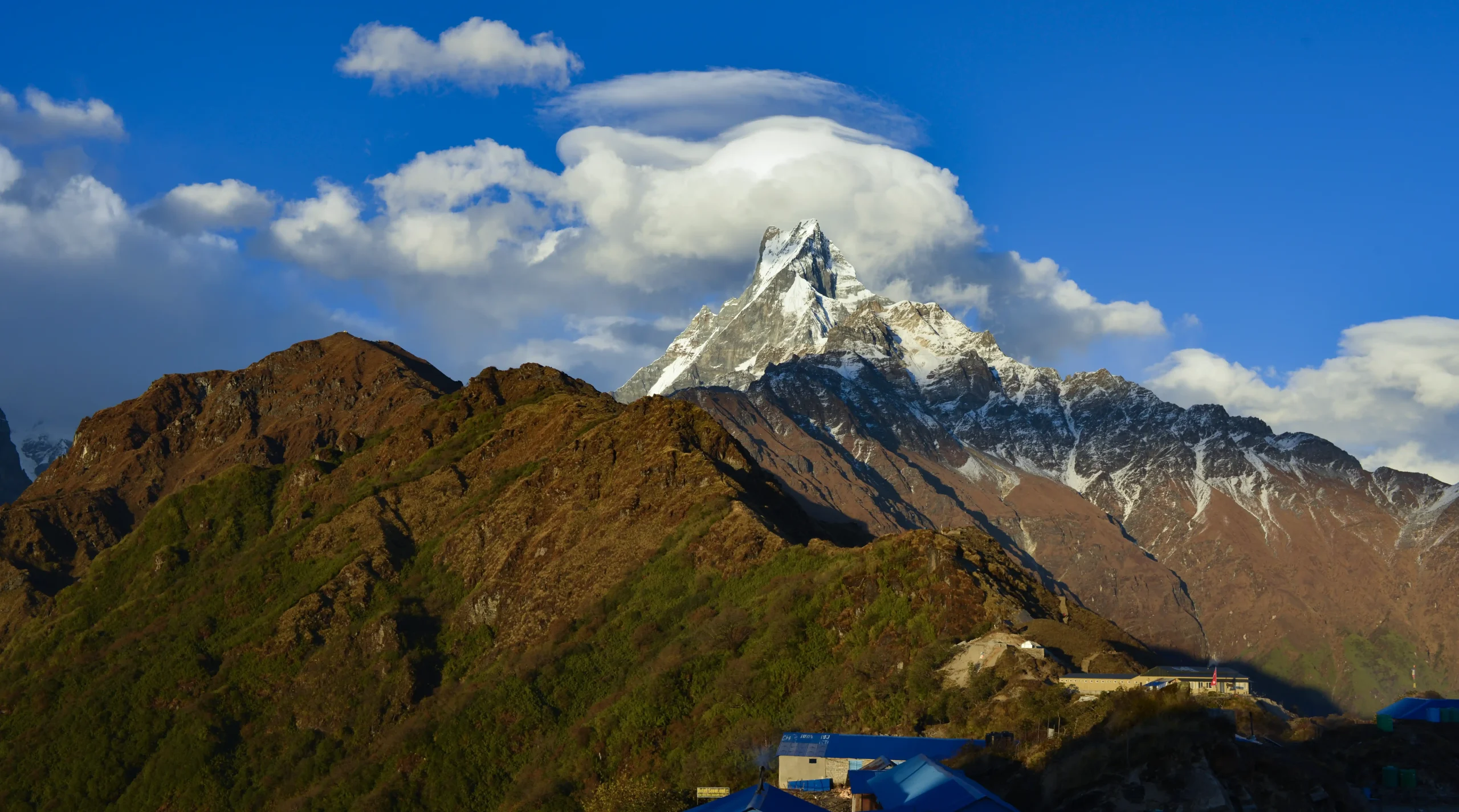
The Mardi Himal Trek is one of the most peaceful and rewarding short treks in the Annapurna region, ideal for travelers who want close-up Himalayan views without walking on crowded trails. Tucked quietly east of the popular Annapurna Base Camp route, this trek follows forested ridges, high alpine pastures, and narrow mountain paths that gradually lead you toward the dramatic south face of Machhapuchhre (Fishtail).
What makes the Mardi Himal Trek special is its balance. In just over a week of walking, you transition from warm subtropical forests to high alpine viewpoints above 4,000 meters, all while maintaining a gentle and natural pace of acclimatization. The trail passes through rhododendron forests, moss-covered trees, and open ridgelines where the mountains suddenly feel very close. From Low Camp onward, the scenery opens dramatically, revealing Annapurna South, Hiunchuli, and the sharp, iconic silhouette of Machhapuchhre dominating the skyline.
Unlike busier routes, Mardi Himal still feels raw and personal. Villages like Sidhing remain largely untouched by mass tourism, offering a glimpse into traditional Gurung life, local farming practices, and simple mountain hospitality. Teahouses along the trail are small and family-run, which aligns perfectly with Firante’s belief in community-based and responsible trekking.
This trek is well-suited for first-time trekkers, photographers, and travelers looking for a quieter alternative to Annapurna Base Camp. It does not require technical climbing skills, but the high viewpoints and exposed ridges near High Camp deliver a true high-Himalayan experience. With careful pacing, experienced local guides, and flexible daily distances, the Mardi Himal Trek offers both comfort and adventure in a short timeframe.
Whether you are trekking as a warm-up for longer Himalayan journeys or simply want an authentic mountain escape, the Mardi Himal Trek delivers powerful scenery, silence, and a strong connection to the landscape — all within easy reach of Pokhara.
Mardi Himal Trek Highlights
Spectacular Mountain Views: Enjoy breathtaking vistas of Machhapuchhre (Fishtail), Annapurna South, Hiunchuli, and Mardi Himal throughout the trek. The upper viewpoint above High Camp offers panoramic, Instagram-worthy scenery.
Off-the-Beaten-Path Experience: Unlike the popular Annapurna Base Camp trek, Mardi Himal is less crowded, allowing trekkers to experience peaceful trails, quiet forests, and serene mountain landscapes.
Diverse Landscapes: Traverse lush rhododendron forests, alpine meadows, and high-altitude ridges, witnessing a dramatic change in vegetation and scenery as you ascend.
Cultural Encounters: Pass through traditional Gurung villages such as Sidhing, where you can experience local hospitality, customs, and lifestyle.
Teahouse/Lodge Accommodation: Stay in cozy, family-run teahouses/lodges along the route, enjoying local meals and authentic mountain hospitality.
Moderate Trekking Challenge: Suitable for first-time trekkers with basic fitness, offering a gradual ascent and well-marked trails, making it an accessible Himalayan adventure.
Perfect for Sunrise & Photography: The trail provides excellent opportunities for sunrise views over Machhapuchhre and other peaks, making it ideal for photography enthusiasts.
Gateway via Pokhara: Start your trek from Pokhara, Nepal’s scenic lakeside city, combining urban comfort with easy access to nature.
Mardi Himal Trek Itinerary – 10 Days
This 10-day Mardi Himal Trek is designed in Firante’s slow-travel style, focusing on natural rhythm, local villages, quiet forest trails, and gradual altitude gain. Unlike crowded Annapurna routes, Mardi Himal offers solitude, close-up mountain views, and a raw Himalayan atmosphere.
Muktinath Nepal Motorbike Tour offers unsurpassed motorcycling experience around the Mustang region to the holy temple of Muktinath.
The northern-west part of Nepal can be considered as a motorcyclist’s heaven with lavish landscape, serene environment and beautifully festooned trails. Our Muktinath Nepal Motorbike Tour is particularly designed for the adventure enthusiasts who yearn for mysteries and adventures while riding their bike up and down the valleys of Nepal. Every bend in the road shall reveal a new thing thus keeping the mystic feel of the trip alive. Our committed tour teams are fully knowledgeable and thus trained to provide riders with a safe and genuine professional service. With the safety of our riders in mind, we thrive to provide our self-efficient and cost effective tour package for the riders. Contact Firante Treks now and join us for a winding ride through the narrow lane ways to the incredible wide opening terrains of Muktinath.
Rara Lake Motorbike Tour is an exciting and adventurous riding tour of West Nepal. It is an overland motorcycle journey in the Karnali region’s wilderness. This motorbike journey brings you to Nepal’s largest lake, Rara, as well as to some of the country’s most attractive locations, including the plain Terai region and the high mountainous region.
Rara Lake is situated at an altitude of 2,990 meters. This region of Nepal is still one of the least visited and untouched. The preserved natural alpine forest and its surrounding are rich in historical value with a distinct western Nepali culture. The beauty of mountain views as well as the wild animals and birds, makes this an excellent spot for people who want to get away from the well-traveled areas.
The gorgeous Karnali region and a motorcycle journey to Rara Lake add to this adventure of the tour. Imagine riding a motorcycle across Rara Lake’s twisting roads, Rocky Mountains, and isolated landscapes. It will surely be a surreal experience. Due to its calming beauty and ideal position, it is referred as “paradise on earth.”
The inhabitants here are very old-fashioned, almost primitive, which allows you to take a step back in time and ponder on the distinctions between modern culture and civilization. As always, the magnificent high mountain beauty enchants and attracts many visitors here. Along the route and surrounding the lake, you can view animals such as the Serow, Yellow-throated Marten, Musk deer and a variety of birds like the Himalayan Monal or Impeyan pheasant as well as Kalij. At 2,980 meters, the lake is also home to indigenous snow trout.
The excitement of riding a motorcycle in Nepal’s western region allows you to spend your days in the wild but also in mind-blowingly calm areas. The trip is thrilling as you ride your motorcycle through the winding roadway, examining the jagged mountains and remote landscapes of the territory. With its serene elegance, you will feel as if you are in a paradise on earth.
The months of February to June, as well as September to November, are ideal for visiting Rara. This location, which is under a slight rain shadow, is drier than other sections of Nepal, even during the monsoon season.
The peaceful and divine quality of Nepal’s largest lake compensates the full motorbike riding trip through the waterway valley, southern plain and mountains. Despite the fact that the entire expedition is undeniably stimulating, being in the mountains with a massive lake in front of you is an experience that cannot be described in words.
ITINERARY OVERVIEW
Day- 01: Arrival in Kathmandu and transfer to Hotel
Firante Treks & Expedition’s 5 Days Nepal Tour is a short and sweet tour package in Nepal which leads you to explore the UNESCO World Heritage sites around Kathmandu valley and Nagarkot, one of the nearest tourists destination.
The 5 Days Nepal Tour begins with a full day sightseeing around Kathmandu valley which includes exploring Pashupatinath temple,Boudhhanath Stupa, Bhaktapur City Tour and Swoyambhunath temple.The Pashupatinath temple is one of the most famous Hindu Sacred temple in Asia which is located on the bank of sacred Bagmati river.Pashupatinath literally means ” the god of animal ”.The Boudhhanath stupa ,one of the biggest Stupas in the World which was built in the late 4th century. The Bhaktapur city is renowned for its own culture and tradition which is also one of the ancient city of Nepal.The pottery squares, five storied temple, historical squares and other ancient temples are the major attraction of this antique city.Finally, the Swoyambhunath temple which is one of the most ancient and mysterious Buddhist temple.It is also known by the name of Monkey temple .From here you can enjoy the amazing 360 ° view of the entire Kathmandu Valley.
Then the next day of 5 Days Nepal Tour begins with a drive to our another popular destination, Nagarkot which takes your heart away from the hustle and bustle of Kathmandu valley.It is one of the beautiful and amazing hill station near Kathmandu valley.From here one can enjoy the fascinating and mesmerizing view of sunrise as well as sunset with beautiful mountains smiling back at you.
ITINERARY OVERVIEW
Day 01: Kathmandu Arrival and Transfer to Hotel in KTM
Day 02: Full Day Kathmandu Sightseeing
Day 03: Kathmandu Sightseeing and transfer to Nagarkot and stay o/n
Day 04: Day hike in Nagarkot and stay o/n
Day 05: Drive to Kathmandu and Transfer to Hotel in KTM