



Trip overview
The Upper Humla Circuit Mountain Biking expedition is one of the most remote and challenging mountain bike routes in the Himalayas, taking riders through the restricted Limi Valley of Humla, Karnali Province in northwest Nepal. Connecting the isolated valleys of Simikot, Nyalu La, the Limi Valley, and the Nepal-Tibet border crossing near Hilsa, this is a route that demands complete preparation, genuine endurance, and an appetite for the genuinely unknown.
Spanning 16 days and approximately 300 kilometres of riding, the circuit loops through restricted Himalayan terrain where modern infrastructure is minimal, settlements are sparse, and the landscape shifts daily between rocky jeep tracks, glacial river crossings, high alpine plateaus, and exposed mountain traverses.
Accommodation on this expedition is expedition-style throughout. From Day 2 onward, riders camp in tents on alpine meadows, glacial terraces, and remote highland ground above Simikot. In some settlements along the Limi Valley corridor, local village homestays offer a roof and basic hospitality. At Hilsa, a small number of simple teahouses serve the border trade community and provide basic overnight lodging. There are no hotels on this route. Riders should expect and embrace the rawness of sleeping close to the landscape they are riding through.
Far northwestern Nepal, Karnali Province, remains one of the country’s least-visited regions. The villages you pass through have sustained Himalayan trade traditions for centuries. The monasteries, prayer walls, and cultural architecture you encounter carry the weight of that history. This is not a supported cycling tour through Nepal’s popular trekking corridors. It is a genuine backcountry expedition.
Why Choose the Upper Humla Circuit Mountain Biking Expedition?
The Upper Humla Circuit Mountain Biking expedition is not just another Himalayan trek converted into a bike route. It is one of the few genuine mountain biking expeditions in Nepal that takes riders through a fully restricted area, across two high altitude passes, and into a valley that sees fewer than a few hundred visitors each year.
Here is what makes this expedition different from anything else available in Nepal:
Restricted Access Real Wilderness The entire route passes through the Upper Humla restricted area, requiring a special government permit. This keeps the trails empty, the villages authentic, and the experience genuinely remote. You will not share the trail with other tour groups.
Two High Altitude Passes Crossing Nyalu La at 5,000m, and Narala Pass at 4,580m on a mountain bike is a rare achievement. Very few cyclists anywhere in the world have ridden both these passes in a single expedition.
Local Guides from Humla Firante is founded by a team originally from Humla, Karnali. Our guides grew up in these mountains and know every village, trail, and family along the route. This is their home, not just a workplace.
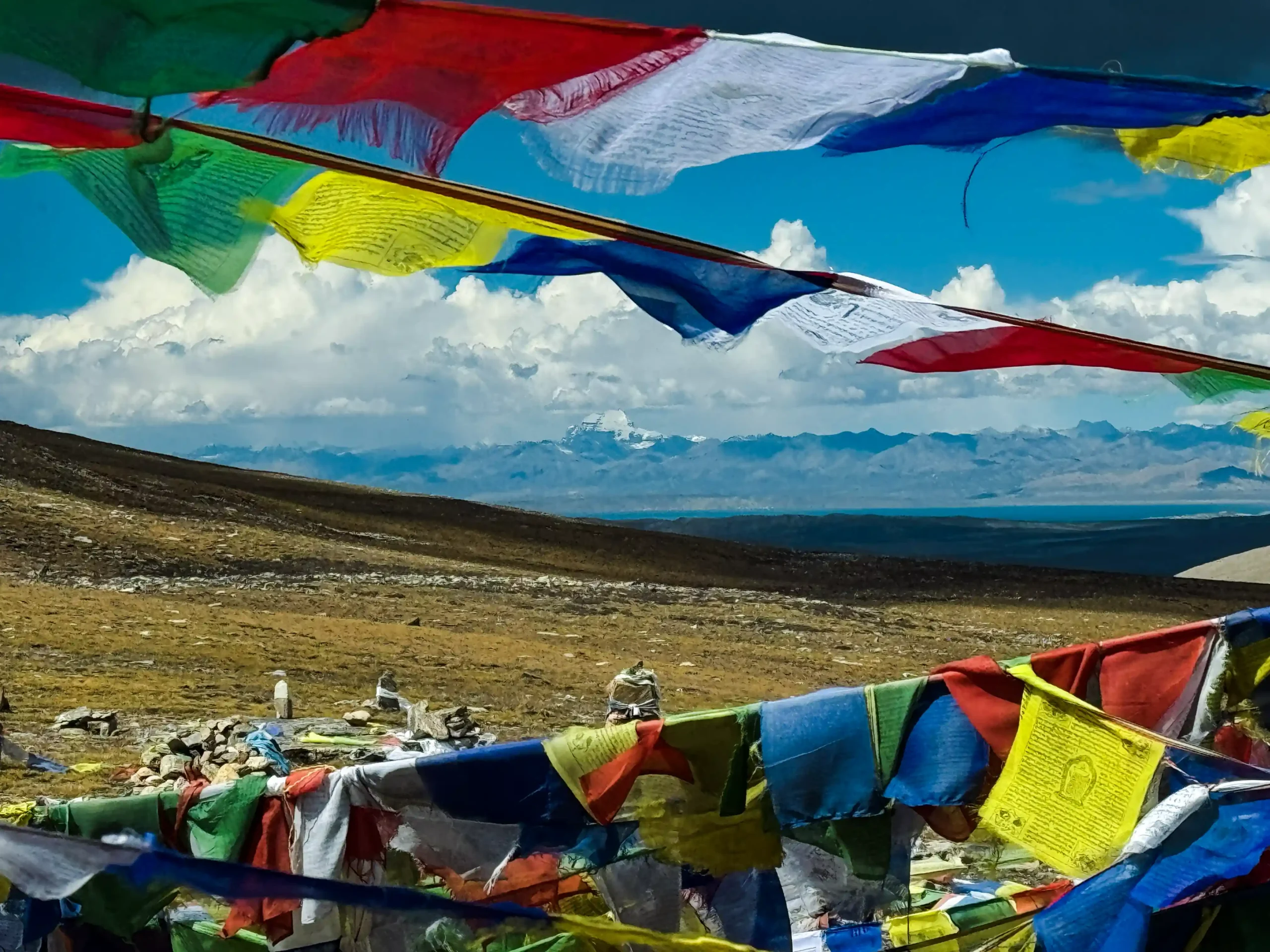
Mt. Kailash Viewpoint On Day 7, riders have the option to ride up to Lapcha Syar at 5,133m for a direct view of the sacred Mount Kailash across the Tibetan border. This viewpoint is accessible to almost no other mountain bikers in the world.
Ancient Culture Along the Route The route passes through traditional Nyinba villages, visits the historic Rinchenling Monastery in Halji, founded in the 10th century, and follows ancient salt trade routes still used by yak caravans today.
Small Groups Only, Maximum 8 riders per departure. This keeps the experience personal, safe, and respectful of the local communities along the route.
The Great Himalaya Trail and Upper Humla’s Undiscovered MTB Corridor
The Great Himalaya Trail (GHT) is the longest and highest trekking route in the world, a 1,700-kilometre high route crossing Nepal from Kanchenjunga in the east to Humla in the far west. The Upper Humla section forms the GHT’s remote western terminus. Thousands of trekkers have dreamed of completing it. Expedition teams have walked it. Almost no one has ridden it on a mountain bike.
Upper Humla Is Where the Annapurna Circuit Was 25 Years Ago
For decades, the Annapurna Circuit was exclusively a trekkers’ route. Then a small number of adventurous cyclists began pushing their bikes through the same corridors. Word spread. The riding was extraordinary. Within a generation, it transformed into one of the world’s most celebrated MTB destinations. That transformation happened because someone looked at a trekking route and recognised what it could be on two wheels. Upper Humla is at that same moment right now.
Why the Upper Humla GHT Converts Perfectly to Mountain Biking
- Trail infrastructure already exists: ancient salt-trading routes used for centuries
- High-altitude jeep track, rocky switchbacks, glacial valley floors, long pass descents: classic MTB terrain
- Restricted area permits permanently limit visitor numbers, so it will never become crowded
- You are among the first organized cycling groups to ride this corridor
The question is not whether Upper Humla will eventually join the ranks of Nepal’s iconic MTB routes. It is who rides it first.
Upper Humla Circuit Mountain Biking Expedition Highlights
- Cross Nyalu La Pass at 5,000m, one of Nepal’s highest MTB crossings
- Ride through the isolated Limi Valley, rarely visited by outsiders
- Visit Halji Monastery(Rinchenling Gompa), one of the oldest Buddhist sites in the Humla region
- Reach the Nepal-Tibet border at Hilsa (3640 m)
- Optional excursion to Limi Lapcha Kailash viewpoint with views toward Mount Kailash
- Cross Narala Pass (4,580m) on the return through entirely new terrain
- Camp in the open Himalayan wilderness above 4,000 metres
- Ride along the western section of the Great Himalaya Trail (GHT)
- Restricted area permit required, keeping visitor numbers genuinely low
- Guided by a team with deep local roots in the Humla and Karnali region
Upper Humla Circuit Mountain Biking Expedition Itinerary
Expand AllFly Kathmandu to Nepalgunj (1,350 m - 150 m)
The expedition begins with a short domestic flight to Nepalgunj, the gateway city for all flights into Humla. Use the afternoon to prepare gear, confirm permit documentation, and rest before the early connecting flight to Simikot the following morning. Overnight at a Hotel in Nepalgunj.
Fly to Simikot (2,910m) and Ride to Burause Gumba(3,430 m)
In the morning, you fly from Nepalgunj to Simikot, the main town of Humla district. The flight takes around 45 minutes and the views from the window are incredible, deep gorges, high ridges, and snow-capped Himalayan peaks. Landing at Simikot airport at 2,962m is already an exciting start to the expedition.
After landing, you do a quick bike check and get ready for your first ride. You ride uphill through Simikot town, past local shops, terraced fields, and traditional stone houses. The trail climbs steadily until you reach Buraunse Gompa at 3,430m, a small but sacred Tibetan Buddhist monastery with beautiful views over the valley.
After visiting the Gompa, you take a short ride down to Buraunse village at 3,100m, home to the Nyinba people, one of the most unique and traditional communities in Humla. You spend some time exploring the village and experiencing the warm and welcoming local culture.
After the village visit, you ride back to Simikot for the night.
Simikot to Kermi (2,670 m)| Mountain Biking in Humla Karnali Valley
Today is your first full day of mountain biking in the Upper Humla region and one of the most rewarding riding days of the entire expedition. You leave Simikot at 2,910m and begin riding northwest, following the Humla Karnali river through a valley that very few cyclists in the world have ever ridden.
Shortly after leaving Simikot, you reach Lagna, a small settlement with just a few houses perched above the trail. Stop here for a moment and look back over the Simikot valley; it is a view you will not forget.
From Lagna the trail drops down into Thakuri territory. You ride through the villages of Dandaphya, Chaugaunphya, and Dharapori one after another, passing stone houses, terraced farmland, and locals going about their daily lives. This is Humla as it really is, completely untouched by tourism.
As the valley narrows, the trail takes you right into the gorge of the Karnali River. This is one of the most thrilling sections of the ride, with the river thundering below you and massive rock walls rising on both sides. Pure Himalayan mountain biking at its best.
After crossing the Hepka Khola you reach the Chaychhara waterfall, one of the most beautiful natural landmarks on the Upper Humla circuit. A perfect place to stop, rest, and take photos.
You arrive at Kermi village in the late afternoon and set up camp nearby. Before dinner, take a well-deserved soak in the famous Kermi hot springs, natural thermal pools right beside the Karnali river. After a full day in the saddle, there is no better way to end the evening.
Kermi to Nyalu La Base Camp, Tsongsa (3,900m)
After a restful night at Kermi and hopefully a morning soak in the hot springs, today you leave the Karnali river valley behind and begin the serious climb toward Nyalu La base camp at Tsongsa.
The riding changes completely today. The easier river track gives way to rocky switchbacks and the trail begins its sustained climb through the upper valley. As you gain altitude, the landscape transforms around you. Rhododendron forests and lower valley scrub are replaced by open alpine meadows and high altitude grazing land. The air gets cooler, and the views get bigger.
As you approach Tsongsa the first snow-capped peaks begin to appear to the north. This is one of those moments on the Upper Humla Circuit where you realise just how deep into the Himalayas you have ridden.
You arrive at Tsongsa at 3,900m, a high altitude grazing area used by seasonal herders. The camp sits near the Tsongsa River with clear views toward Nyalu La and the surrounding peaks. Seliman Lake at 4,570m is also nearby for those who want a short evening walk.
An early dinner and early night is strongly recommended tonight. Tomorrow’s crossing of Nyalu La pass at approximately 4,950m to 5,000m is the most demanding day of the entire expedition and you will want to be fully rested.
Cross Nyalu La Pass (5,000m) and Ride to Takchi
The defining day of the expedition. The climb to Nyalu La at 5,000 metres requires significant effort through rocky terrain and thin air. The pass opens to a panoramic sweep of the Himalayan main range. The descent to Takchi is technical and deeply rewarding. Camp at Takchi in the open valley beyond the pass.
Ride to Chyakpalung (4,949m)
Beyond Nyalu La the landscape shifts into the drier character of the trans-Himalayan rain shadow. Harder-packed trails, wider sky, and a striking colour palette of ochre, rust, and grey define the day. Camp on the open Chyakpalung plateau, one of the most atmospheric camping spots of the entire circuit.
Ride to Lapcha Syar, Kailash Viewpoint (5,133m) and Back to Chyakpalung
Today is an optional but highly recommended full day excursion from the Chyakpalung camp toward the Lapcha Kailash viewpoint at 5,133m. For those who make the effort the reward is extraordinary.
The route climbs from camp onto high windswept ground above the valley. The terrain is exposed and the altitude demands careful pacing throughout the day. Take it slowly, drink plenty of water, and enjoy the incredible surroundings as you gain height.
Under clear conditions, and Humla is known for its clear skies, the sacred Mount Kailash rises dramatically beyond the Tibetan border on the northern horizon. At 6,638m Mount Kailash is one of the most revered mountains on earth, sacred to Hindus, Buddhists, Jains, and Bon followers worldwide. Seeing it from this remote Himalayan viewpoint, completely alone with no other tourists in sight, is a deeply moving experience that very few travelers ever have.
The return ride back to Chyakpalung follows the same route and gives you a chance to take in the vast landscape at a more relaxed pace. Back at camp you have earned a proper rest before the days ahead.
Ride to Dhukling (4,000m)
A longer riding day through the increasingly dramatic Limi Valley corridor. Ancient mani walls at village approaches and snow peaks framing the skyline define the day. Camp near Dhukling, one of the circuit’s most isolated overnight spots. The combination of technical terrain and cumulative expedition fatigue makes consistent pacing essential.
Ride to Halji Village( 3,700 m)and Rinchenling Monastery Visit
Today is a shorter riding day covering approximately 18 km, and the extra time is saved for one of the most historically significant stops on the entire expedition. Halji village is home to Rinchenling Monastery, one of the oldest and most important Buddhist monasteries in the entire Humla region.
Rinchenling Monastery was founded by the great Buddhist scholar and translator Rinchen Zangpo during the 10th to 11th century AD. Rinchen Zangpo dedicated his life to translating Buddhist scriptures from Sanskrit into the Tibetan language and is said to have built a total of 108 temples across the Himalayan region during his lifetime. Rinchenling is one of his most significant surviving works.
Inside the monastery complex you will find original ancient murals, rare thangka collections, and resident monks continuing a tradition of Buddhist practice that has survived here for over a thousand years. Walking through Rinchenling is a genuinely rare experience. Very few visitors ever reach Halji and the monastery receives almost no international tourists.
After the monastery visit you settle into Halji village for the night. Depending on availability riders stay in a local village homestay or camp near the village.
Ride to Chenglugma (4,200m to 4,300m)
One of the longer riding days as the route pushes northwestward toward the Nepal-Tibet border corridor. River crossings, loose gravel descents, and exposed traverses feature throughout. Camp at or near Chenglugma in the open highland terrain.
Ride to Hilsa (3,700m) and Nepal Tibet Border
Arriving at Hilsa is one of the great moments of the expedition. Perched at 3,700 metres above the Karnali canyon, Hilsa is Nepal’s primary border crossing with Tibet. The frontier atmosphere is immediate: Tibetan traders, mule caravans, and the vast plateau stretching north across the border. Overnight in one of Hilsa’s basic local teahouses, which serve the border trade community. Simple rooms, shared facilities, and strong tea.
Rest and Acclimatisation Day at Hilsa
A rest day at Hilsa serves dual purposes: physical recovery after the outbound section, and altitude acclimatisation before the sustained climbing of the return route. Optional shorter rides around the Hilsa area allow active recovery. The teahouses at Hilsa provide basic meals and a chance to recharge. Use the day for equipment checks, hydration preparation, and gear washing.
Ride to Palbang via Narala Pass (4,580m)
The longest and most physically demanding day of the return journey. The climb to Narala Pass at 4,580 metres is a significant undertaking after accumulated days of riding. The reward is a sweeping descent into new valley terrain on the Simikot side of the watershed. Camp at Palbang after the long descent.
Ride to Salli Khola (2,400 to 2,700 m)
The longest riding day by distance on the circuit. The route descends through river valleys toward Salli Khola. While terrain is generally more forgiving than the high-pass days, the distance and accumulated expedition fatigue make this demanding. Camp at Salli Khola, the final staging point before Simikot.
Ride to Simikot and Circuit Complete
The final riding day brings the circuit full circle to Simikot. The arrival carries a different emotional weight from the departure, the landscape is familiar now but experienced through the lens of everything encountered over the past 13 days. Overnight in Simikot guesthouse: the first proper roof since Nepalgunj. An evening of celebration and preparation for return flights.
Fly Simikot to Nepalgunj to Kathmandu
The return journey: Simikot to Nepalgunj, then onward to Kathmandu. Build a minimum buffer day into international travel plans as Simikot’s airstrip is weather-sensitive and delays are common. Arrival in Kathmandu closes one of Nepal’s most challenging and rewarding mountain biking expeditions.
Not quite satisfied with this itinerary?
No worries – every traveler has unique preferences, and we’d be happy to adjust the plan to match your style, comfort, and interests. Let us know what you’d like to add or change, and we’ll create a journey that feels truly yours.
Customize TripCost Includes
- Domestic flights: Kathmandu to Nepalgunj to Simikot (return)
- Airport transfers and all ground transportation
- Experienced Upper Humla mountain biking guide
- Local support staff and full logistical coordination
- Basic mechanical bike support during the expedition
- Camping on alpine and highland terrain throughout the circuit
- Local village homestays where available in Limi Valley
- Teahouse accommodation at Hilsa, Nepalgunj, and Simikot
- Full board meals throughout the mountain biking section
- Safe drinking water provision where operationally possible
- Camping equipment including tents, sleeping mats and cook support
- Restricted Area Permit (RAP) for Upper Humla
- All required local entry permits and TIMS documentation
- Basic first aid and emergency communication support
- Acclimatisation planning integrated into the itinerary
- Guided visits through remote Himalayan villages and Halji Monastery
Cost Excludes
- International airfare to and from Nepal
- Nepal entry visa fees
- Personal travel insurance including high altitude evacuation cover
- Mountain bike and spare parts (riders bring their own bike)
- Helmet, protective gear and personal riding apparel
- Personal sleeping bag rated to at least -5 degrees Celsius
- Snacks, soft drinks and alcoholic beverages
- Battery charging, internet access and hot shower fees
- Laundry services and personal porter upgrades
- Emergency helicopter evacuation expenses
- Extra accommodation due to flight delays or weather disruptions
- Costs from route changes due to political restrictions or natural events
- Tips for guides and support staff
- Personal medical expenses during the expedition
- Any services not listed in the inclusions above
Additional Informations
Permits and Entry Requirements
Upper Humla is a restricted area requiring a special government Restricted Area Permit issued by the Department of Immigration Nepal. This permit must be arranged through a registered Nepal trekking or expedition company, as independent permits are not available. Nepal’s standard tourist visa is required for all international participants.
Mountain Bike Requirements and Spare Parts
A hardtail or full-suspension mountain bike with 29 inch or 27.5 inch wheels and hydraulic disc brakes is strongly recommended. Carry comprehensive spares: two spare inner tubes minimum, tyre sealant, multi-tool, brake pads, cable sets, chain breaker and replacement links. No bike shops exist between Simikot and Hilsa.
Camping and Accommodation Reality
Above Simikot, this is a camping expedition. Riders sleep in tents on alpine meadows, glacial terraces, and remote highland plateaus for most nights of the circuit. In some Limi Valley settlements, local families offer simple homestay accommodation. At Hilsa, a small number of basic teahouses serve the border trade community with simple rooms and shared facilities. Bring a good quality sleeping bag rated to at least -5°C and a sleeping bag liner for added warmth and hygiene.
Domestic Flights and Reliability
Both the Simikot-Nepalgunj leg and the Kathmandu-Nepalgunj flight operate on mountain airstrips. Simikot’s airstrip is weather-sensitive and delays of several hours or full-day postponements are common. Build a minimum of one buffer day into international travel plans after the Day 16 return.
Travel Insurance: Mandatory Coverage
Comprehensive travel insurance with high-altitude helicopter evacuation coverage to at least 5,500 metres is essential. Standard travel policies typically do not cover helicopter rescue at altitude. Verify your policy explicitly before departure. Medical facilities in Upper Humla are extremely limited.
Connectivity and Communication
Mobile network coverage is extremely limited beyond Simikot. Riders should not rely on mobile connectivity for navigation or communication during the expedition. Carrying a personal satellite communicator such as a Garmin inReach device is strongly recommended for personal peace of mind.
Trip FAQs
1. What is the Upper Humla Circuit Mountain Biking expedition?
The Upper Humla Circuit Mountain Biking expedition is a 16-day backcountry MTB route through the restricted Limi Valley of Humla, Karnali Province in northwest Nepal. The circuit covers approximately 300 kilometres of mixed terrain, including jeep tracks, singletrack, river valley trails, and high altitude passes. It is one of the most remote and challenging mountain bike routes available anywhere in the Himalayas.
2. How difficult is the Upper Humla Circuit Mountain Biking route?
The Upper Humla Circuit Mountain Biking expedition is rated challenging to extreme. Riders cross two high altitude passes including Nyalu La at 5,000m and Narala Pass at 4,580m. The total riding distance is approximately 300 kilometres over 14 riding days. Prior experience with high altitude mountain biking, multi day expedition riding, and technical terrain is strongly recommended before attempting this route.
3. What type of mountain bike is suitable for the Upper Humla Circuit?
A full suspension mountain bike with 29 inch wheels is strongly recommended for the Upper Humla Circuit Mountain Biking expedition. Tyres with good grip on loose rock and gravel are essential. Riders should bring spare tubes, brake pads, a derailleur hanger, and basic tools. Firante provides basic mechanical support throughout the expedition but spare parts for your specific bike model are your responsibility.
4. When is the best time for Upper Humla Circuit Mountain Biking?
The best seasons for Upper Humla Circuit Mountain Biking are April to May and September to October. These windows offer the most stable weather conditions, clear skies, and manageable trail conditions at high altitude. The route is not recommended during the monsoon season from June to August due to heavy rainfall, landslides, and extremely difficult trail conditions.
5. What permit is required for the Upper Humla Circuit Mountain Biking expedition?
The Upper Humla Circuit Mountain Biking route passes through a government-restricted area. All riders require a Restricted Area Permit (RAP) issued by the Department of Immigration Nepal. This permit is mandatory for all foreign nationals and is not available on arrival. Firante handles all RAP permit arrangements on behalf of clients as part of the expedition package.
6. How many riders are in each Upper Humla Circuit Mountain Biking group?
Firante limits all Upper Humla Circuit Mountain Biking departures to a maximum of 8 riders per group. Small group sizes keep the experience personal, maintain safety standards in remote terrain, and ensure minimal impact on the local communities along the route.
7. What accommodation is available on the Upper Humla Circuit Mountain Biking route?
Accommodation on the Upper Humla Circuit Mountain Biking expedition is expedition style throughout. From Day 2 onward riders camp in tents on alpine meadows and remote highland terrain. In some Limi Valley villages local homestays are available. At Hilsa near the Nepal-Tibet border, basic teahouses provide simple overnight lodging. There are no hotels on this route
8. Can I see Mount Kailash on the Upper Humla Circuit Mountain Biking expedition?
Yes, on Day 7 of the Upper Humla Circuit Mountain Biking expedition, riders have the option to ride up to Lapcha Syar at 5,133m, locally known as the Lapcha Kailash viewpoint. On a clear day, the sacred Mount Kailash rises dramatically on the northern horizon beyond the Tibetan border. This is one of the most extraordinary viewpoints accessible by mountain bike anywhere in the world.
9. Is the Upper Humla Circuit Mountain Biking suitable for beginners?
The Upper Humla Circuit Mountain Biking expedition is not suitable for beginners. The route requires strong physical fitness, prior multi day riding experience, and the ability to ride technical terrain at high altitude for consecutive days. Riders should be comfortable with remoteness, basic expedition camping, and self-sufficiency in areas with no mobile network or emergency services nearby.
10. Why choose Firante for the Upper Humla Circuit Mountain Biking expedition?
Firante is founded by a team originally from Humla, Karnali Province. Our guides were born and raised in these mountains and have personal knowledge of every trail, village, and pass on the Upper Humla Circuit Mountain Biking route. This is not a route we discovered from a map. It is the region we come from. That local knowledge makes every day on the trail safer, more authentic, and more meaningful than any other operator can offer.
You may also like
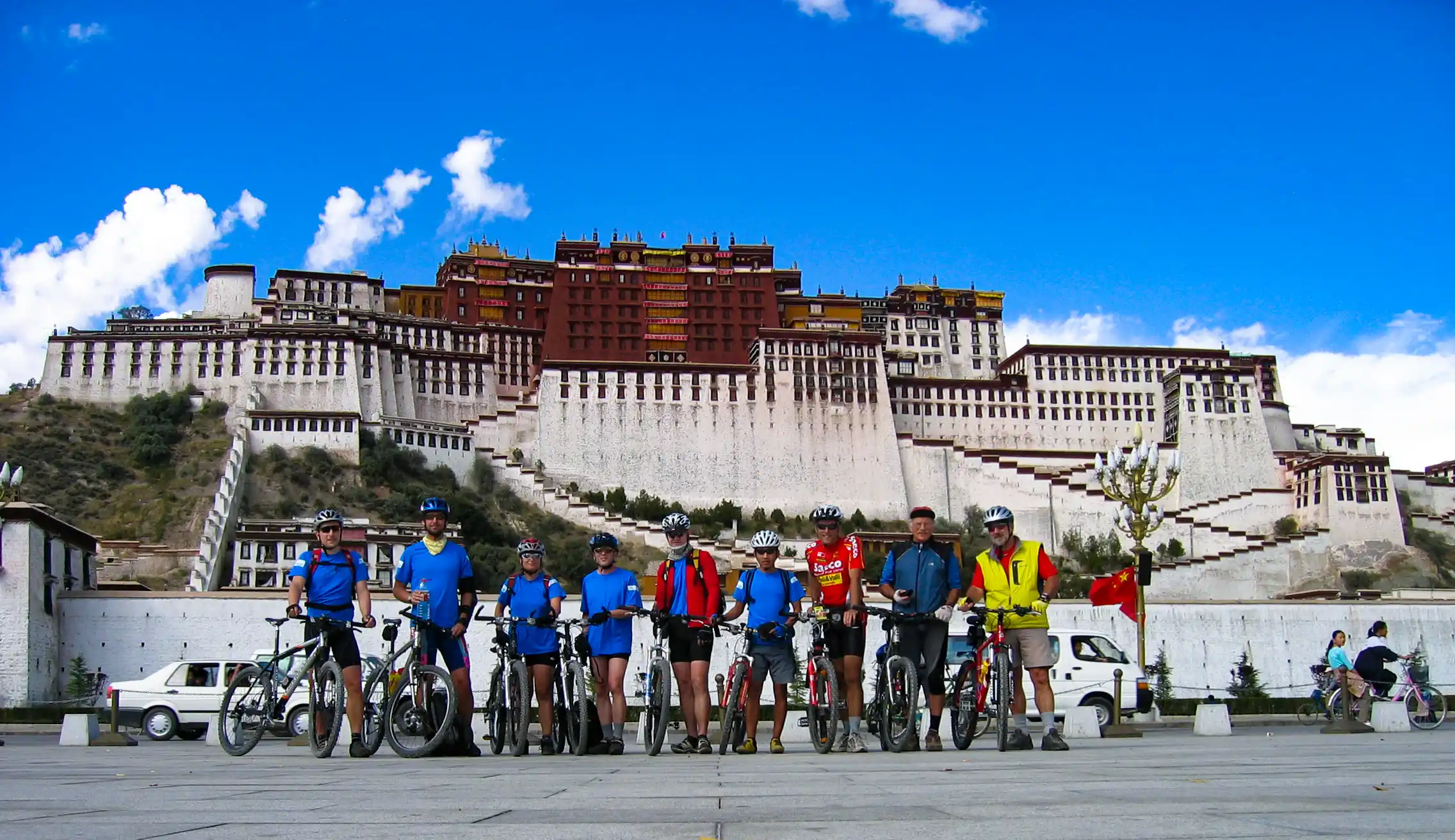
The Lhasa to Kathmandu ride could be classified as one of the most demanding rides` open to cyclists. You have to deal with high...
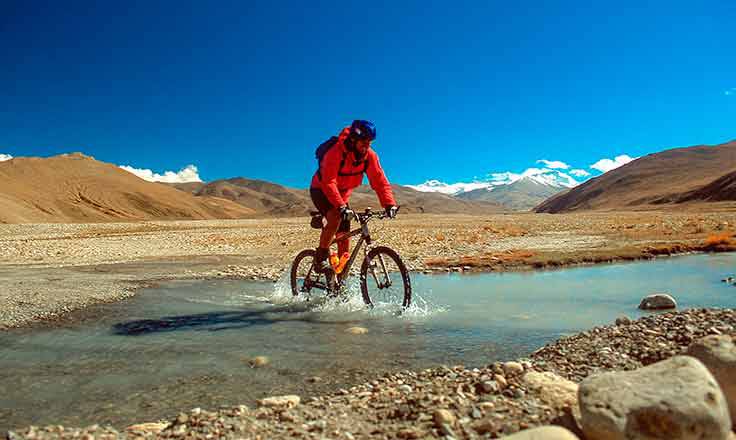
Mountain journey to Heaven is truly into Lake Manasarovar and Mt. Kailash which is an axis for all religions. In May 1993 the governments...
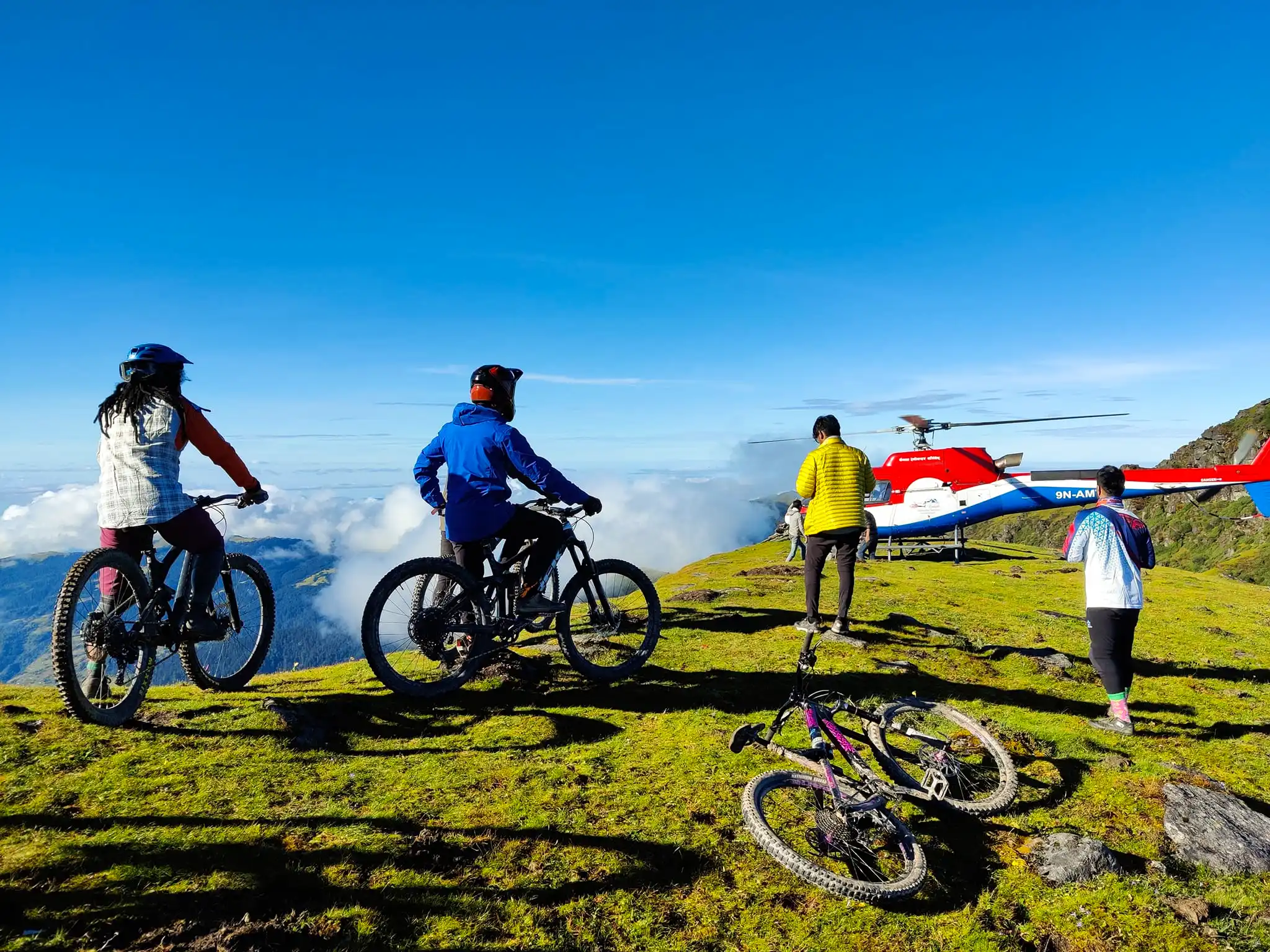
Our Heli biking starts with an exciting chopper ride across the Mt. Annapurna and Dhaulagiri from Pokhara. We begin our ride from Muktinath located...
This tour runs around Kathmandu Valley visiting all the high points, you’ll have 360 degree views from hilltops that capture the greatest Himalayan peaks,...
A special tour to give you a complete experience of Nepal’s diverse landscape and culture as you ride from the foothills of the Himalayas...
