



Trip overview
You don’t need fourteen days to feel Everest. You need one morning.
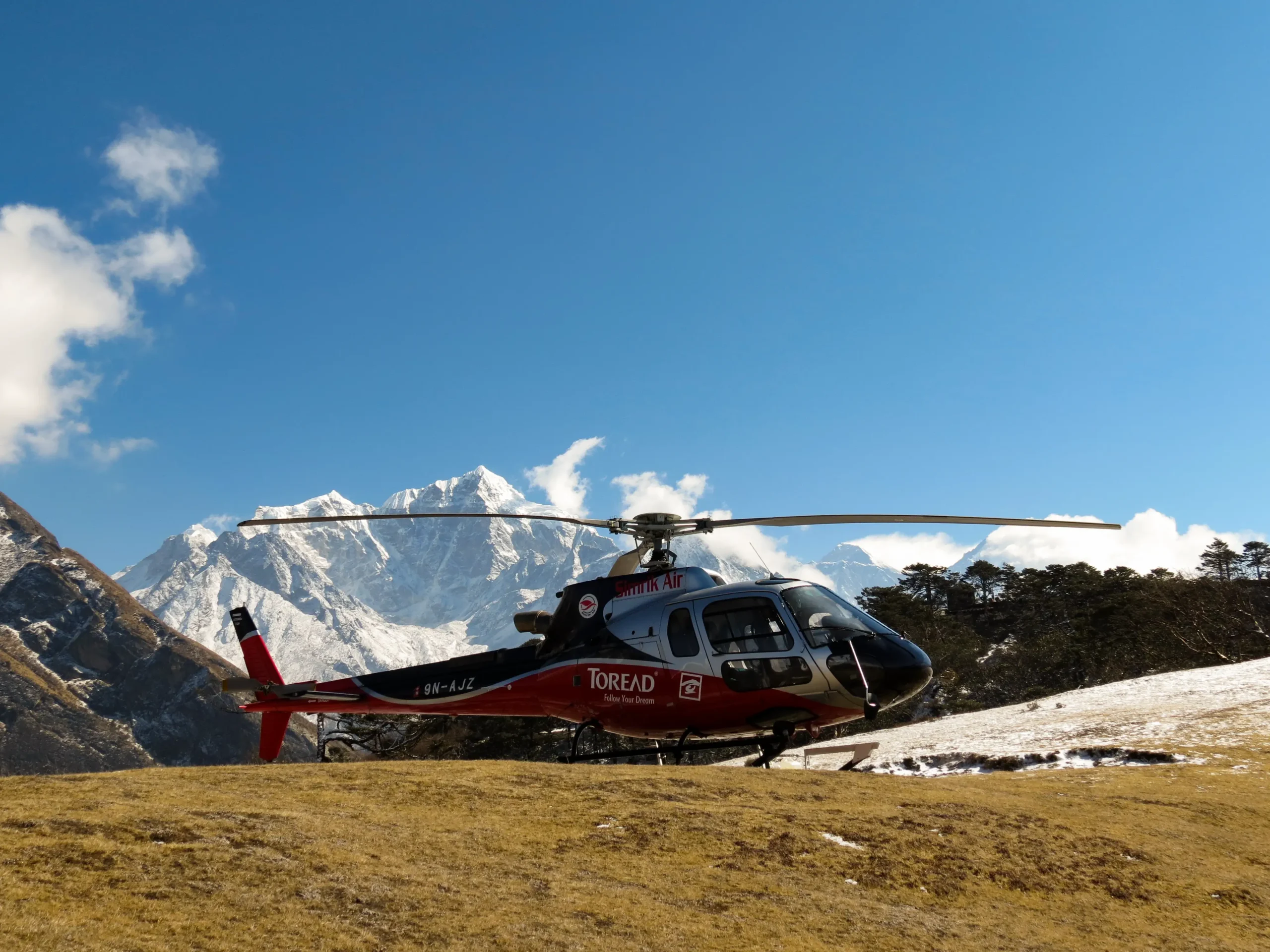
Everest Base Camp Helicopter Tour with Breakfast at Hotel Everest View is one of the most unforgettable ways to experience the Nepal Himalaya in a single day. This scenic helicopter journey from Kathmandu includes aerial views of the Everest region, the Khumbu Glacier, and breakfast at the famous Hotel Everest View.
Most people who dream of seeing Everest never go. Not because they don’t want to, but because life gets in the way. Two weeks of trekking, weeks of preparation, the altitude worry, the physical training. The dream stays on the list, year after year.
This tour exists for everyone who has ever looked at a photo of Everest and felt something shift inside them, but couldn’t give up two weeks to act on it.
In a single morning, you will lift off from Kathmandu as the city is still waking up, cross the Himalayan foothills as dawn light turns the peaks gold, and fly deep into the Khumbu Valley, a region that has drawn climbers and dreamers for over a century. You will enjoy aerial views of the Everest Base Camp region and Khumbu Glacier, the landscape where some of history’s greatest mountaineers began their journey toward the summit of Mt. Everest.
The experience continues with a landing beside the world’s highest hotel for a hot breakfast with Mt. Everest filling the window in front of you.
You will be back in Kathmandu before noon. The rest of your day is yours. But the experience stays with you long after the flight is over.
What makes this tour different
There are many helicopter tours to Everest in Nepal. Most of them fly you to Base Camp and back. Some add a landing. A handful include breakfast somewhere along the way.
This tour is built differently because we believe the journey to Everest deserves more than a flyby.
When you land at Hotel Everest View (3,880m), you are not rushing back to the helicopter after five minutes. You are sitting down at a real table, with real food, in front of floor-to-ceiling windows that face directly toward the summit of Mt. Everest. You have a full hour there. Time to breathe. Time to look. Time to let it actually land on you, that you are having breakfast at nearly four thousand meters, surrounded by the greatest mountain range on earth.
That hour is what our guests remember most. Not the fastest moment. The slowest one.
Who this tour is for
If you are reading this, you already know it is for you.
But to be specific: this tour works beautifully for travellers with limited time who want the genuine Everest experience without a 14-day commitment. It is perfect for families, children, and elderly parents who could never manage the trek, and can sit beside you at breakfast with Everest in the window. It is the most extraordinary thing you can do for a honeymoon, anniversary, or birthday at any altitude. It is ideal for business travellers with one or two days between meetings in Kathmandu who refuse to leave Nepal without seeing the mountains.
There is no minimum fitness requirement. There is no minimum age. If you can board a helicopter and sit in a seat, you can do this.
When to go
The two best windows are March to May (spring rhododendrons blooming in the foothills, crystalline skies, long days) and October to November (autumn post-monsoon clarity, sharp visibility, stable weather). Both seasons book weeks or months in advance.
Winter flights (December–February) are possible and often beautifully clear, though mornings are cold. The monsoon months of June to August are not recommended because clouds and rain make the views unpredictable.
If you are planning for 2026 or 2027 peak season, booking early is not just advice, it is the difference between going and missing out.
Everest Base Camp Helicopter Tour with Breakfast at Hotel Everest View Highlights
- Private hotel pickup at 5:45 am, no scrambling, no shared transfers, just a vehicle waiting for your group
- Round-trip helicopter flight from Kathmandu through the full Khumbu Valley corridor
- Aerial flyover of Everest Base Camp (5,364m), close enough to see the tents of active expeditions on the glacier
- Refuelling stop at Lukla, the legendary mountain airport where every Everest trek begins
- Birds-eye views of Namche Bazaar and Tengboche, the Sherpa heartland, seen from above
- 1-hour breakfast at Hotel Everest View (3,880m), the world’s highest-situated hotel, with panoramic views of Everest, Lhotse, Ama Dablam, Nuptse, Pumori, and Cho Oyu fully included, no hidden charges
- Back in Kathmandu by 11:00 am, your afternoon is completely free
- Suitable for all ages, no trekking, no fitness requirement, no altitude acclimatisation needed
Everest Base Camp Helicopter Tour with Breakfast at Hotel Everest View Itinerary
Expand AllThe full journey, Hour by Hour
5:45 am: Hotel Pickup & Transfer to Kathmandu Airport
Most of Kathmandu is still asleep. Your private vehicle is already waiting outside.
There is something about leaving in the dark that makes an adventure feel real. You drive through empty streets toward the domestic terminal at Tribhuvan International Airport, and somewhere between your hotel and the helipad, it begins to sink in that today is the day you see Everest.
Our representative meets you at the terminal and guides you through every step: ticket verification, the standard passenger weight check (a safety requirement for high-altitude flights, our pilots take this seriously, and so do we), and all paperwork. You do not navigate anything alone.
6:00 am – 7:00 am: Airport Check-In & Helicopter Boarding
The domestic terminal is its own small world at this hour, mountain guides, expedition teams, trekkers heading for Lukla, pilots with coffee cups and weathered faces. You are part of this world today.
Once all formalities are complete, you are walked to the helipad. The helicopter sits waiting. Smaller than you imagined, perhaps. More powerful than you expect.
7:00 am: Helicopter Flight from Kathmandu to the Everest Region
The rotors build. The ground drops away.
Kathmandu spreads below you its temples, its rooftops, its chaotic, beautiful tangle of streets and courtyards growing smaller as you rise eastward. In minutes, the city gives way to terraced fields and river valleys. Then the hills steepen. The forests thicken. And ahead of you, the white line of the high Himalaya begins to appear on the horizon.
Over the next 45 minutes, that white line becomes a wall. And the wall becomes something that has no word for it in most languages, the full, unobstructed, impossible scale of the world’s highest mountains, seen from the air, at sunrise.
8:15 am: Refuelling Stop at Lukla Airport
The helicopter descends briefly to Lukla (2,860m), home of the Tenzing-Hillary Airport, the short cliff-edge runway that has been the starting point of virtually every Everest expedition for decades.
While the helicopter refuels (about 15 minutes), you step out. The air is cooler here. Thinner. Sharper. Porters move along the trail below. Prayer flags line the ridgelines. This is the last town before the high mountains begin, and it hums with quiet, purposeful energy.
After refuelling, the flight continues deeper into the Khumbu Valley, the sacred valley of the Sherpa people, and the gateway to the roof of the world.
8:30 am: Aerial Views of Everest Base Camp & the Khumbu Glacier
As the helicopter rises again, the landscape changes completely. The hills of the lower valley give way to raw, high-altitude terrain, grey moraine, white glaciers, and enormous ridgelines dusted with snow.
You fly over Namche Bazaar, the busy Sherpa trading hub perched improbably on a hillside. Over the rooftop of Tengboche Monastery, its white walls and red-gold roofs sit quietly at 3,867m. And then, as the valley narrows and the peaks close in around you, you see it.
Everest Base Camp.
From above, it looks smaller than you expect and bigger than you imagined at the same time. The tents of active expeditions dot the Khumbu Glacier in bright flashes of colour. The Icefall stretches beyond broken, blue-white, impossibly steep, leading up toward the South Col and the summit above. This is where climbers sleep before attempting the highest point on earth.
Your pilot circles. You have time to look. To photograph. To be still for a moment with the weight of where you are.
8:45 am: Landing at Kalapatthar (5,545m)
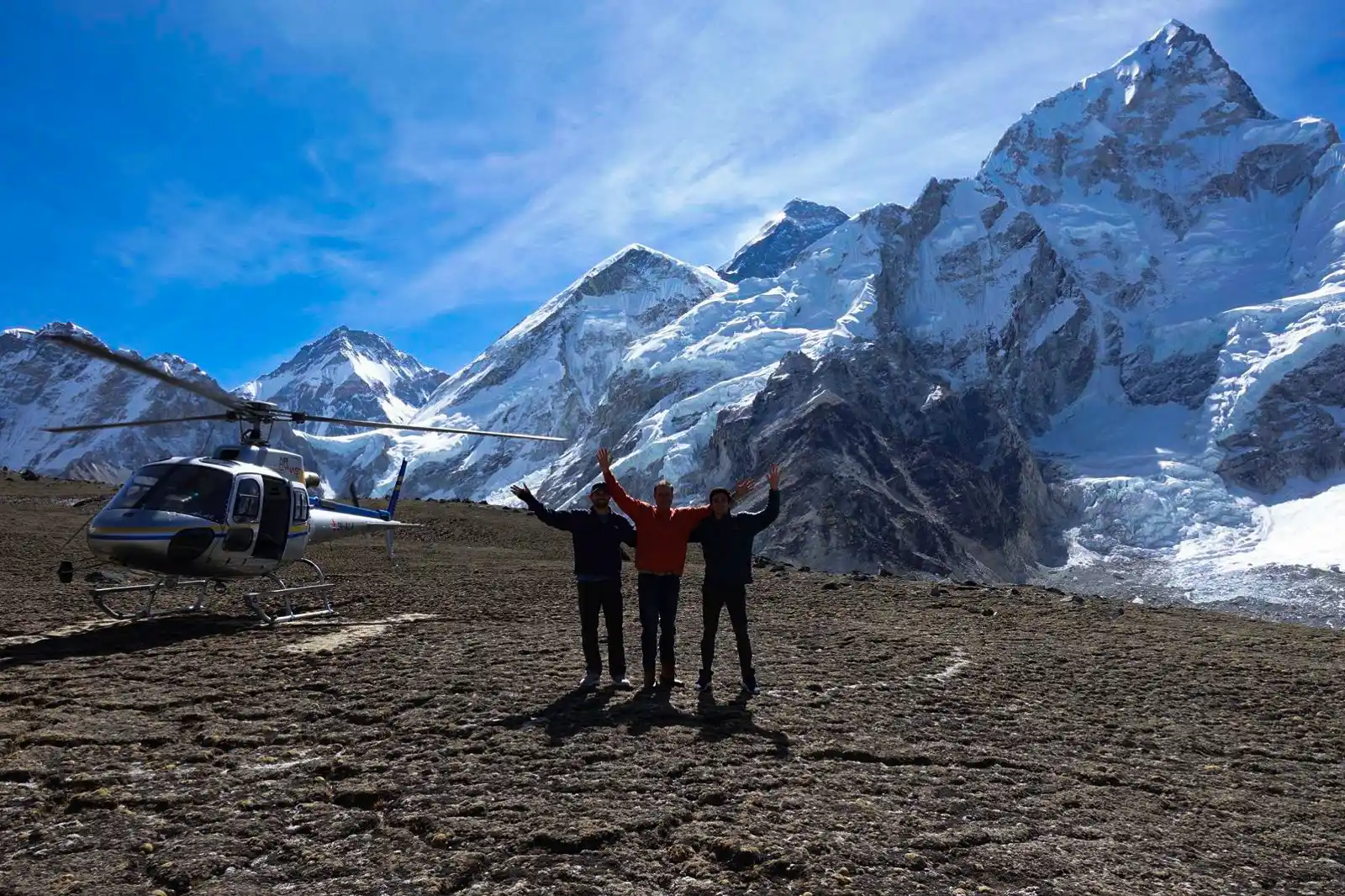
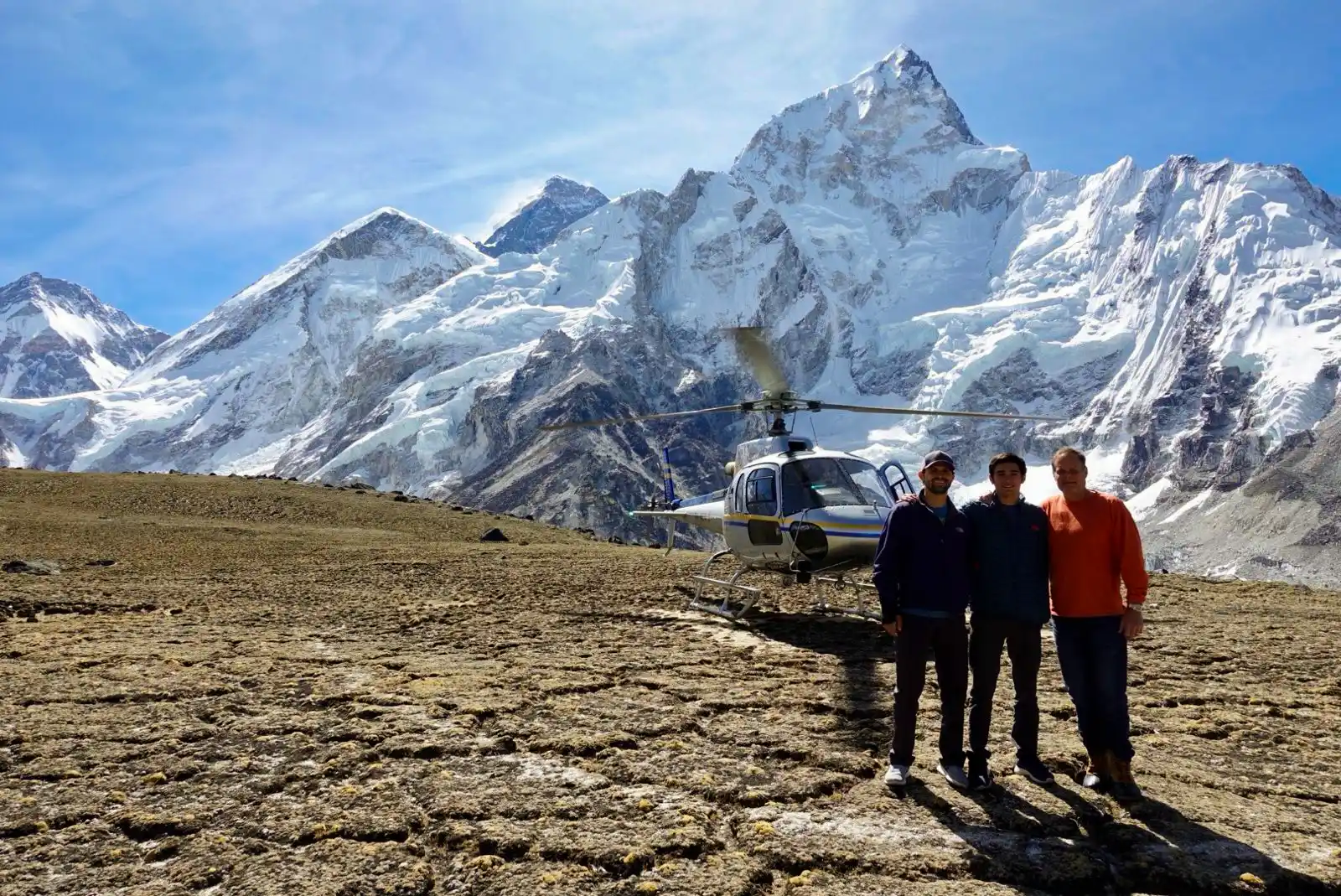
The helicopter banks and descends toward the dark rocky ridge of Kalapatthar, the famous viewpoint above Gorak Shep that offers the closest and most dramatic view of Mt. Everest available to non climbers anywhere on earth.
You land. The rotor slows. The door opens.
The air at 5,545 metres is thin. Around half the oxygen density of sea level. You will feel it immediately. A slight heaviness in the chest. The awareness of every breath. Step slowly. Move carefully. Let your body adjust for a moment. Then look up.
Mt. Everest is directly in front of you. Not a distant shape on the horizon but the full, enormous, impossible mass of it. The black pyramid of the summit rising above the South West Face, the Khumbu Glacier sweeping down from the Western Cwm below it. This is the view that mountaineers carry in their minds for years before attempting the climb.
You have 15 to 20 minutes here. Photograph. Stand quietly. Let it land on you.
Peaks visible from Kalapatthar:
Mt. Everest — 8,848.86m
Lhotse — 8,516m (world’s 4th highest)
Nuptse — 7,861m
Changtse — 7,543m (Everest’s north peak)
Pumori — 7,161m
Khumbu Icefall — directly below
9:15 am – 10:15 am: Breakfast at Hotel Everest View (3,880m)
After Kalapatthar, the helicopter descends to Syangboche and lands beside Hotel Everest View (3,880m), the world’s highest-situated hotel, built by a Japanese company in 1971 and originally accessible only by helicopter.
The drop in altitude from 5,545m to 3,880m is immediate and welcome. Breathing becomes easier. The cold eases slightly. And you walk into a warm dining room where a hot breakfast is waiting.
The dining room faces directly southeast toward the summit of Mt. Everest. Floor-to-ceiling windows. Morning light. The peaks arranged in front of you like something out of a painting you could never afford.
You sit down. Hot food arrives. Tea or coffee. The summit of Everest, at 8,848.86 metres, is visible in the window. There is no hurry. You have a full hour.
Sherpa guides stop in on their way up the trail. Trekkers who have walked for a week to reach this altitude look up at the hotel with quiet envy. You watch the morning light move across the face of Ama Dablam. Someone at your table goes quiet for a while, and no one asks why.
This is the hour that every guest remembers. Not the fastest moment of the tour. The slowest one.
Peaks visible from your breakfast table:
Mt. Everest — 8,848.86m
Lhotse — 8,516m (world’s 4th highest)
Nuptse — 7,861m
Ama Dablam — 6,812 m
Pumori — 7,161m
Cho Oyu — 8,201m (world’s 6th highest)
10:15 am: Return Helicopter Flight to Kathmandu
Leaving is harder than arriving.
You board the helicopter again, and the hotel, the mountain, the silence rises away from you as you climb. The valley opens back up. The landscape begins its gradual return from high-altitude wilderness to foothills to forest to farmland.
The helicopter stops briefly at Lukla for its final refuel. Then the last leg westward, back over the hills, back over the patchwork of the Kathmandu Valley, descending toward the city that is now, after this morning, somehow both the same and different.
11:00 am – 11:30 am: Arrival Back in Kathmandu
You land at Tribhuvan Airport just as the city is finding its rhythm. Your private vehicle takes you back to your hotel.
By the time most travellers in Nepal are finishing breakfast, you have already stood at 5,545 metres, looked Everest directly in the face, and been back in Kathmandu in time for lunch.
Not quite satisfied with this itinerary?
No worries – every traveler has unique preferences, and we’d be happy to adjust the plan to match your style, comfort, and interests. Let us know what you’d like to add or change, and we’ll create a journey that feels truly yours.
Customize TripCost Includes
- Everest Heli Charter fees/joining with other clients
- Breakfast and Lunch with tea/coffee
- An Experienced English speaking guide
- First aid Medical kit
- TIMS,Permit and National Park fees
Cost Excludes
- Travel insurance and emergency evacuation expenses
- All kinds of beverages (Soft/Hard)
- Tips
Additional Informations
Why Travel with Firante Treks & Expeditions
An Everest helicopter tour is a once-in-a-lifetime experience, and having the right local team behind the journey makes a real difference. At Firante Treks & Expeditions, we work closely with experienced mountain flight crews and trusted local partners to make the experience smooth, safe, and personal from the moment your day begins in Kathmandu.
Our team understands how quickly conditions can change in the Everest region. Flight operations in the Nepal Himalaya depend heavily on weather, visibility, and mountain safety conditions, which is why we stay actively involved in every departure rather than simply processing bookings online. Guests receive direct communication, local assistance, and clear updates throughout the journey.
We also believe the Everest experience should feel more meaningful than a rushed sightseeing flight. From your early morning helicopter departure to breakfast at Hotel Everest View overlooking the Khumbu Valley, every part of the tour is designed to give travelers a genuine connection to the mountains, the landscape, and the experience of being close to the world’s highest peaks.
Trip Gallery
Trip FAQs
1. Is it safe?
All our flights operate under the Civil Aviation Authority of Nepal (CAAN) regulations. Our pilots are experienced, licensed professionals with extensive high-altitude hours. We do not fly in unsafe conditions. If the weather prevents the tour, we will reschedule or refund in full.
2. How many people fly together?
Standard tours operate with up to 5 passengers plus the pilot. Private charters for couples or small groups are available. Contact us for details.
3. Why is everyone weighed at the airport?
High-altitude helicopters operate within strict payload limits for passenger safety. This is standard across all reputable Nepal operators. It is not a discretionary check, it is a legal requirement.
4. Is the Hotel Everest View breakfast genuinely included?
Yes. It is in the price. Not optional, not an add-on, not “pay at the hotel.” We include it because it is the centrepiece of the tour, not an afterthought.
5. What if my flight is cancelled due to weather?
We will reschedule at no additional cost. If rescheduling is not possible within your travel dates, you receive a full refund.
6. Can I do this with a bad knee / heart condition / fear of heights?
Consult your doctor for any specific medical concern — we recommend this genuinely, not as a disclaimer. Fear of heights is surprisingly common among our guests; the helicopter is enclosed, smooth, and far less alarming than most people expect. Many guests who were nervous before departure describe the flight as the most peaceful experience of their lives.
You may also like
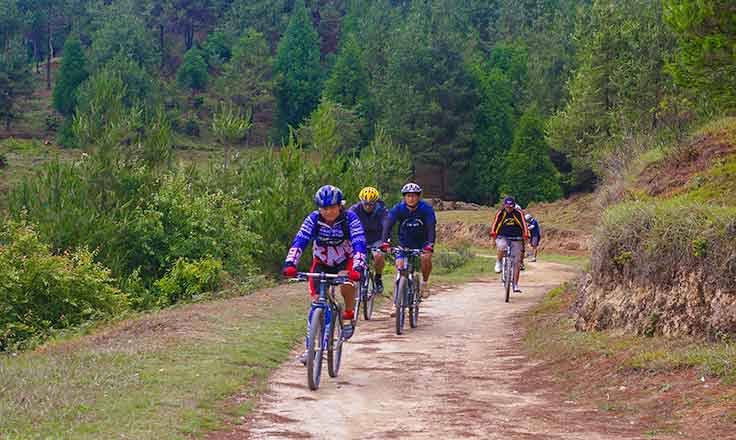
Are you thinking about one-day tour? You have numerous options to go wherever you prefer. This tour is basically a cross-country type with mixed...
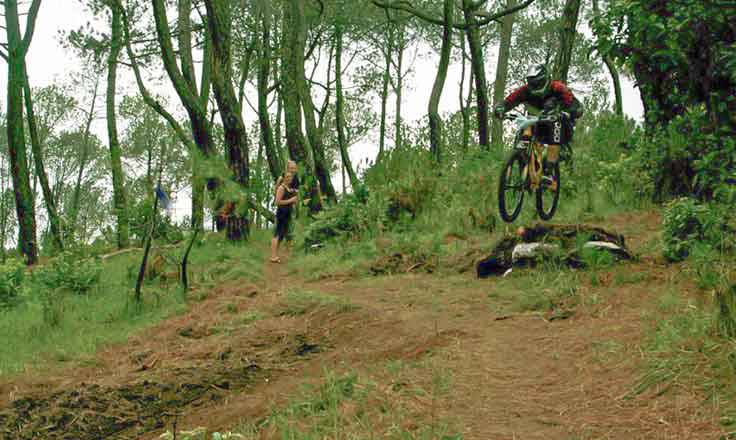
A one-day Downhill tour with 700 meter decent, so forget the up hills! We will drive you to a Hilltop Nagarkot (2100m) for breakfast....
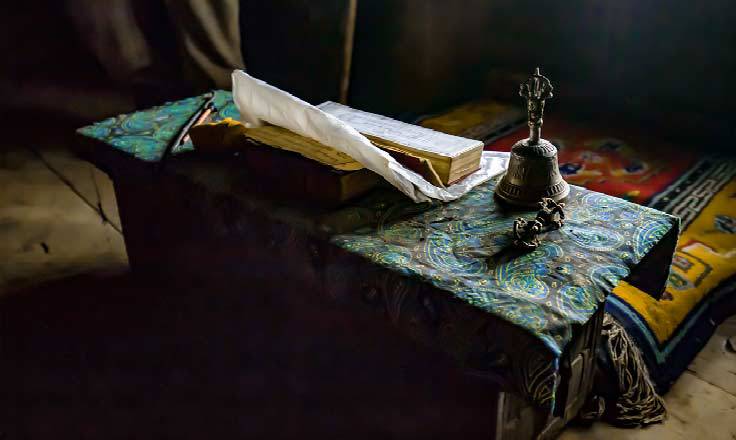
Take a leisurely time out from your busy life to experience the enchanting Monasteries around the Kathmandu valley. There are hundreds of ancient Buddhist...
